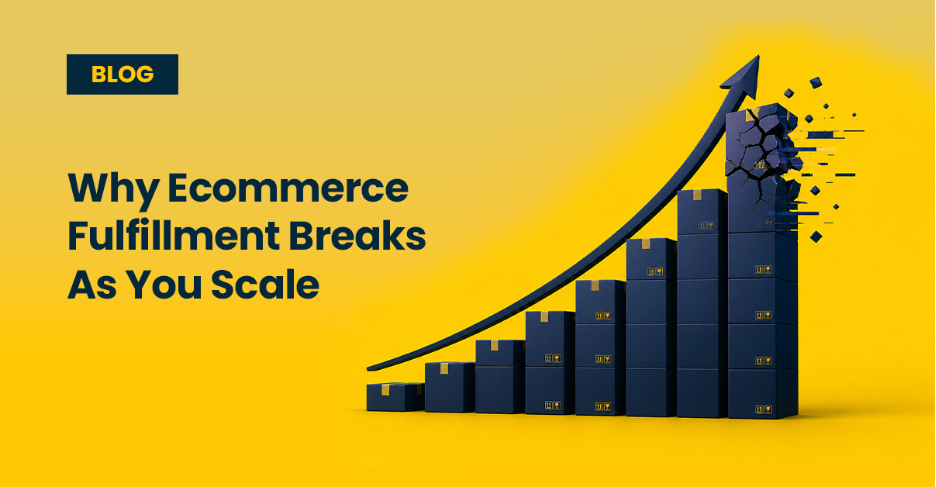
Growth looks clear on dashboards. It rarely feels clean inside operations. Orders increase, revenue trends upward, and then something shifts. Timelines stretch, errors creep in, and teams start reacting instead of managing. This is where ecommerce fulfillment fails at scale. Not because demand is too high, but because the system behind it was never built to handle the complexity that comes with growth.
Most brands assume fulfillment will keep pace with sales. It does not. It starts showing strain in small ways before it breaks into visible ones. If you have already seen early signs of pressure, it helps to step back and understand how ecommerce fulfillment actually works at scale before trying to fix isolated issues.
This blog breaks down where things go wrong, why it happens, and what needs to change before growth starts working against you.
Why Growth Feels Like Progress but Looks Like Chaos Internally
Growth is not just more orders. It introduces more variables, more dependencies, and far less margin for error. At a smaller scale, fulfillment operates in a relatively linear way. Orders come in, inventory is picked, packed, and shipped. Inefficiencies exist, but they are manageable because teams compensate manually and keep things moving.
As volume increases, that linear flow disappears. Operations become interconnected, and a delay in one part of the process starts affecting everything downstream. What once felt like a minor inefficiency begins compounding across hundreds or thousands of orders. This is where ecommerce fulfillment fails at scale in a way that feels sudden, even though the cracks were always there.
From Linear Operations to Interdependent Systems
At scale, ecommerce fulfillment is not just a sequence of tasks. It becomes a system where inventory, picking, packing, dispatch, and delivery are tightly linked. A slowdown in inventory allocation affects picking. Slower picking delays dispatch. Delayed dispatch impacts delivery timelines. Each step relies on the previous one functioning correctly.
You start to notice patterns emerging. Orders increase, but timelines become inconsistent. Teams spend more time fixing issues than executing processes. Decision-making slows down because information is fragmented across systems. Costs begin to rise without a clear explanation.
Why This Is a System Design Problem
This is not a growth problem. It is a system design problem. Most fulfillment setups are built for stability. They assume predictable demand, steady volumes, and controlled workflows. Growth disrupts all of that by introducing variability.
This is how scaling ecommerce creates system instability. Not through a single major failure, but through a series of small breakdowns that begin to overlap. From the outside, the business looks like it is scaling smoothly. Internally, it becomes harder to manage, and control starts slipping.
Where Ecommerce Fulfillment Breaks at Scale (And Why It’s Not Obvious at First)
Fulfillment rarely collapses in one obvious place. It weakens across multiple points, and early signs are easy to overlook. A delayed shipment here or a picking error there does not immediately feel critical. Over time, these issues begin to stack, and that is when the system starts to feel unreliable.
Inventory Disconnect
43% of ecommerce orders face stockouts due to poor inventory visibility and placement, leading to lost sales averaging $1.1 trillion globally in 2023 (Source: BigCommerce 2024 Ecommerce Inventory Management Report).
Inventory challenges at scale are not just about stock levels. They are about placement, accuracy, and accessibility. Products sit in the wrong locations, which increases picking time and slows down operations. Stockouts occur even when inventory exists somewhere in the system, simply because it is not where it needs to be.
This is often one of the earliest signs of fulfillment capacity issues at scale. The system loses its ability to align inventory with demand in a controlled way, and decision-making becomes reactive instead of planned.
Workflow Strain
Processes that worked at lower volumes begin to show their limits as order volume increases. Manual checks, inconsistent picking methods, and reliance on individual judgement slow everything down. Teams develop their own ways of working, which creates inconsistency and reduces efficiency.
During high-volume periods, this turns into visible delays. Orders start queueing up, and clearing the backlog becomes increasingly difficult. This is where fulfillment delays during demand spikes begin to surface, and what feels like a temporary issue is often a sign that the workflow itself is not built to scale.
Dispatch And Delivery Gaps
Shipping introduces another layer of complexity that becomes more difficult to manage as you grow. Expanding into new regions increases delivery variability, and more carriers mean more handoffs, each with its own risk of delay.
At this stage, fulfillment bottlenecks in scaling ecommerce extend beyond the warehouse. Orders may leave on time, but delivery timelines become inconsistent, which directly impacts customer experience.
What makes this phase particularly challenging is that nothing appears completely broken. Orders are still being processed, customers are still receiving deliveries, and revenue continues to grow. However, the system is no longer predictable. Small inefficiencies start interacting with each other, creating a chain reaction that becomes harder to control over time.
The Real Problem: Your System Was Built for Stability, Not Variability
Most fulfillment operations are designed around predictability. They assume steady order volumes, consistent workflows, and controlled inputs. Ecommerce does not operate that way. Demand fluctuates constantly due to promotions, seasonal peaks, marketing campaigns, and shifting customer behaviour.
This mismatch between system design and real-world demand is where the real problem lies.
The Impact of Variability on Rigid Systems
Systems built for stability rely on fixed processes and capacity. When variability increases, those systems cannot adapt quickly enough. Instead of flexing with demand, they slow down and create bottlenecks.
The pressure itself is not the issue. The inability of the system to handle variability is what causes failure.
A setup that works efficiently at 500 orders a day might start failing at 800, not because the increase is extreme, but because there is no flexibility built into the process.
What Happens During Peak Demand
Peak periods expose these weaknesses clearly. Flash sales, holiday spikes, and sudden growth surges push the system beyond its limits. Without the ability to scale processes and adjust capacity, performance drops quickly.
Delays increase, errors become more frequent, and teams shift into reactive mode. Backlogs build up and take time to clear, which affects operations even after the peak period ends.
Why Recovery Becomes Difficult
What is often overlooked is that these disruptions have a lasting impact. Inventory becomes misaligned, workflows lose consistency, and customer expectations shift based on inconsistent experiences.
This is why ecommerce fulfillment fails at scale in a way that feels difficult to recover from. The challenge is not just handling higher volumes, but managing unpredictability without losing operational control.
Why Costs Spiral Before You Even Realise There’s a Problem
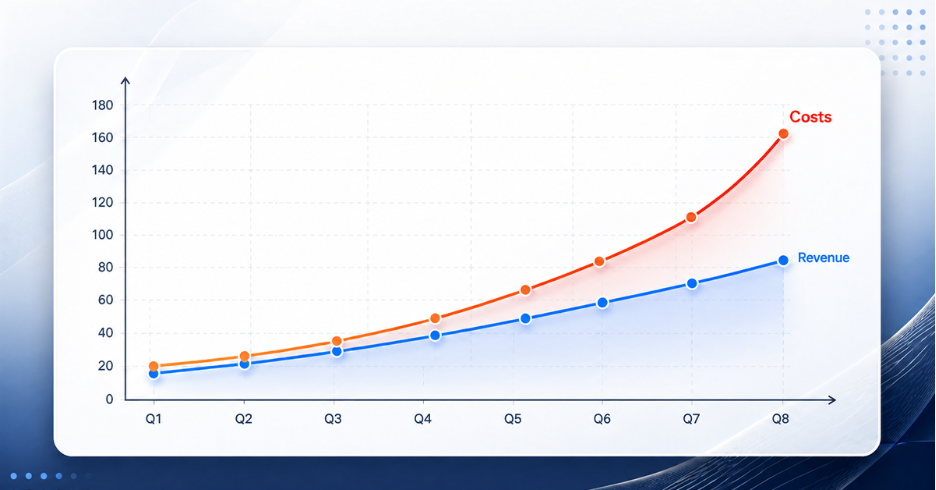
When fulfillment starts to strain, costs do not spike immediately. They build gradually and often go unnoticed until they begin affecting margins.
Labour Inefficiency
As workflows slow down, more people are needed to manage the same volume of orders. Teams spend time resolving errors, searching for inventory, and handling exceptions instead of executing streamlined processes. Productivity declines while labour costs increase.
Shipping And Delivery Costs
Shipping becomes less efficient as inventory is not optimally positioned. Orders are split across multiple shipments, and expedited shipping is used more frequently to compensate for delays. Carrier decisions become reactive, which drives costs higher.
Returns And Reprocessing
Errors in picking and packing lead to incorrect shipments, which increases returns. Each return requires additional handling, inspection, and restocking, adding to operational costs.
This is where a clear ecommerce fulfillment cost breakdown reveals the impact. While revenue may continue to grow, the cost per order rises, making profitability harder to sustain.
The Moment Growth Becomes Hard to Manage
There comes a point where growth starts to feel overwhelming rather than exciting. This usually happens when visibility across operations begins to break down.
Loss Of Operational Visibility
Teams no longer have a clear view of inventory levels, order status, or potential issues. Data becomes fragmented, and information is not updated in real time.
This is the impact of lack of fulfillment visibility and tracking. Without accurate and timely data, decision-making becomes reactive and often delayed.
Reactive Decision-Making
When visibility is limited, teams rely on assumptions. Inventory is moved without clear demand insights, staffing decisions are made without understanding workload, and issues are addressed after they escalate.
This is when ecommerce growth becomes difficult to manage. Not because the business is too large, but because the system lacks the transparency required to support it effectively.
Why Most Brands Try to Fix the Wrong Things
When fulfillment challenges become visible, the immediate response is often to act quickly. More people are hired, new tools are introduced, and in some cases, fulfillment partners are replaced.
These actions address symptoms rather than the root cause.
Hiring more staff without improving processes increases cost without improving efficiency. Introducing new tools without integration creates additional complexity instead of clarity. Changing partners without fixing internal workflows shifts the problem rather than solving it.
The core issue remains unchanged. The system is not designed to scale, and without addressing that, short-term fixes provide only temporary relief.
What Actually Needs to Change Before Fulfillment Can Scale
Scaling fulfillment requires a shift in how operations are designed and managed. The focus needs to move from reacting to issues to building systems that can handle growth sustainably.
Standardized Processes
Clear, structured workflows ensure consistency across operations. Standardization reduces dependency on individual judgement and improves efficiency at scale.
Real-Time Visibility
Accurate tracking of inventory, orders, and operations enables better decision-making. Visibility allows teams to identify and resolve issues before they escalate.
Optimized Inventory Placement
Positioning inventory based on demand patterns reduces shipping costs and improves delivery timelines. It also helps prevent bottlenecks within the warehouse.
Planned Capacity and Scalability
Warehousing, labour, and delivery capabilities should be aligned with projected growth. Systems should be stress-tested to handle peak demand and variability without breaking.
Fulfillment should be treated as a strategic function, not just an operational necessity. It directly impacts customer experience, cost efficiency, and long-term growth.
Conclusion: Fulfillment Should Scale With You, Not Against You
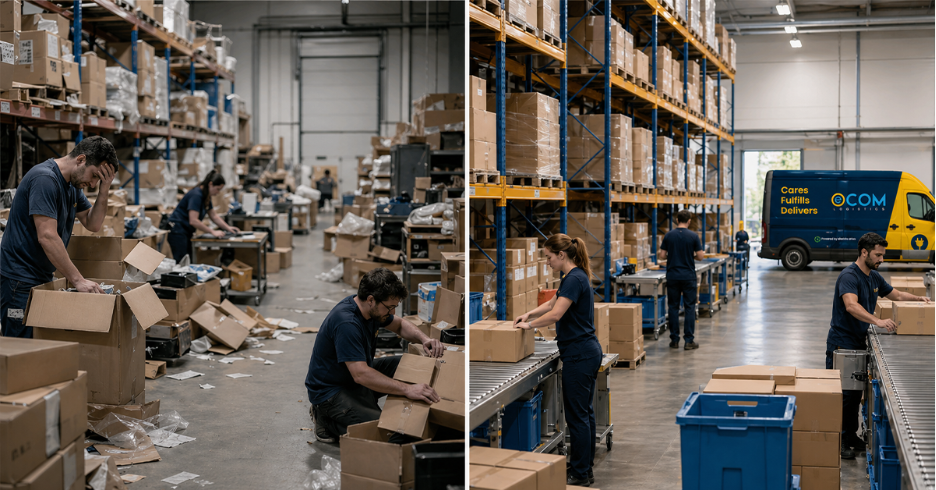
Growth does not break fulfillment. It exposes whether fulfillment was built to scale in the first place.
When systems are designed for stability instead of variability, growth introduces pressure that they cannot absorb. What begins as minor inefficiencies evolves into widespread operational challenges that affect cost, customer experience, and performance.
The reality is that ecommerce fulfillment fails at scale only when the underlying system is not prepared for it. With the right processes, visibility, and infrastructure, fulfillment can support growth instead of slowing it down.
So if scaling ecommerce fulfillment in Canada is on your mind, this is where working with a partner that is built for scale makes a measurable difference. Ecom Logistics is designed to handle complexity, variability, and growth without compromising efficiency or customer experience. From optimised inventory placement to integrated technology and scalable operations, the focus is on building fulfillment systems that grow with your business.
If your operations are starting to feel strained, this is the right time to fix it before the cost of inefficiency compounds further. Contact us to see how Ecom Logistics can support your growth with a fulfillment system that is built to scale.
FAQs
You should start upgrading your fulfillment setup before operations feel unmanageable. If order volumes are growing consistently, error rates are increasing, or your team is relying heavily on manual fixes, it is a sign your current system will not hold at the next stage of growth.
A scalable fulfillment process can handle increased order volume without a drop in speed, accuracy, or cost efficiency. If performance declines as volume rises, or if you need to add disproportionate resources to keep up, the system is not truly scalable.
Technology provides visibility, consistency, and control. It helps track inventory in real time, standardise workflows, and reduce manual errors. Without integrated systems, scaling operations becomes slower, more complex, and harder to manage.
It depends on your growth stage and operational complexity. In-house fulfillment offers control but requires significant investment and expertise. Outsourcing can provide scalability and infrastructure, but only if the partner is equipped to handle growth and integrates well with your systems.
Inventory placement directly impacts how quickly and efficiently orders can be delivered. Storing products closer to demand reduces shipping time and cost, while poor placement leads to delays, split shipments, and higher logistics expenses.
Key metrics include order accuracy rate, order processing time, on-time delivery rate, cost per order, and return rate. Tracking these consistently helps identify inefficiencies early and measure whether your operations are improving or declining. Industry benchmarks: Aim for >99% order accuracy, <2-day processing, >95% on-time delivery, <$5/order cost, <5% returns.
Preparation involves forecasting demand, aligning inventory levels, stress-testing workflows, and ensuring adequate staffing and carrier capacity. Systems should be tested under higher-than-normal volumes to identify weak points before they are exposed.
The biggest mistake is reacting too late. Many brands wait until operations are already strained before making changes, which makes fixes more complex and expensive. Scaling requires proactive system design, not reactive problem-solving.
- About the Author
- Latest Posts