Fulfillment in 2026 has quietly become one of the most important strategic decisions for e-commerce brands. It is no longer just about shipping orders on time, but about visibility, flexibility, customer experience, and operational resilience.
Canadian e-commerce brands are operating in an environment where customer expectations continue to rise, delivery timelines are scrutinised closely, and operational inefficiencies quickly translate into lost trust. At the same time, margins are under pressure, and businesses are expected to scale without significantly increasing overheads.
Against this backdrop, many brands are asking a critical question. Should we continue managing fulfillment in-house, or is it time to move to a tech-enabled third-party logistics provider?
This guide is designed to help e-commerce brands make that decision with clarity. It looks beyond surface-level pros and cons and focuses on how fulfillment actually works in practice in 2026.
How Fulfillment Has Changed for E-commerce Brands
E-commerce fulfillment today is fundamentally different from what it was even a few years ago. Selling online is no longer limited to a single storefront or a predictable order flow. Brands often operateacross multiple sales channels, serve customers across regions, and manage a growing number of SKUs.
At the same time, customers expect faster delivery, accurate tracking, and a seamless post-purchase experience. A delayed shipment or incorrect order is no longer viewed as a minor inconvenience. It directly impacts brand perception and repeat purchases.
Operationally, fulfillment has also become more data-driven. Inventory visibility, order status updates, and performance metrics are now expected to be available in real time. Manual tracking and spreadsheet-based processes struggle to keep up with this level of complexity.
These changes mean that fulfillment is no longer just a back-office function. It is a core part of how e-commerce brands compete and grow.
What In-house Fulfillment Really Looks Like in 2026
Managing fulfillment in-house remains a viable option for some e-commerce businesses. However, it looks very different in 2026 compared to earlier stages of growth.
The Advantages of In-house Fulfillment
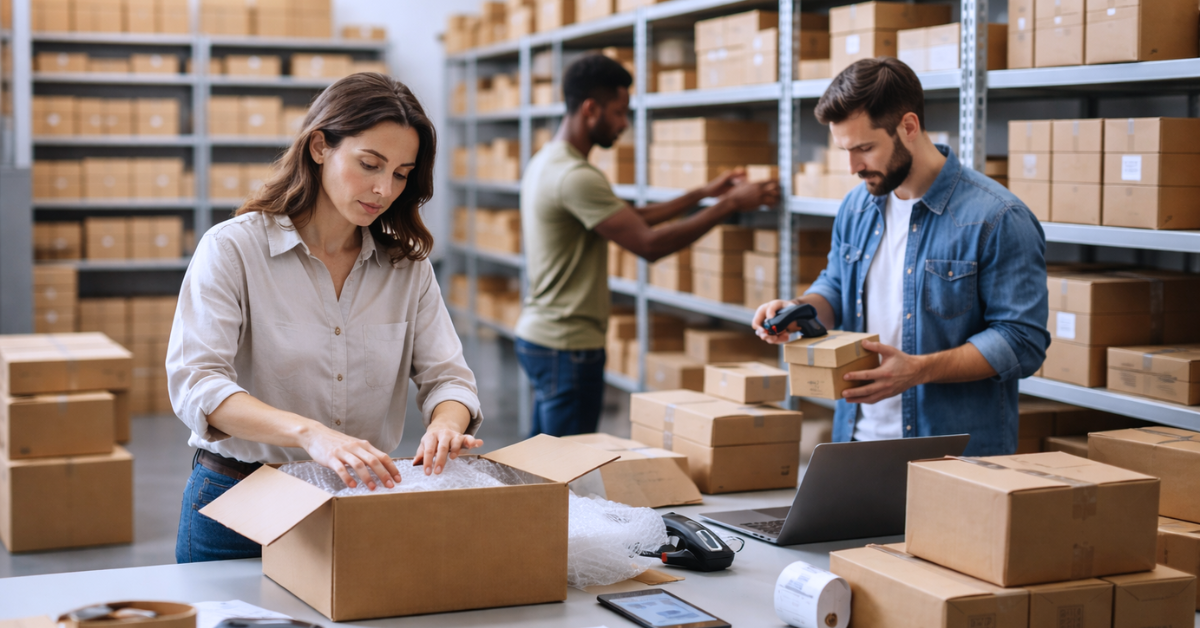
One of the main reasons brands choose in-house fulfillment is control. Managing warehousing, picking, packing, and shipping internally allows teams to design custom workflows and make quick changes when needed.
In-house teams are often deeply familiar with the products they handle. This can be an advantage for brands with highly specialised items or complex packaging requirements. There is also a sense of ownership that comes with running operations internally, which some founders value highly.
For early-stage businesses with low and predictable order volumes, in-house fulfillment can be cost-effective. When volumes are stable and processes are simple, internal teams can manage operations without excessive complexity.
The Hidden Costs of In-house Fulfillment
While the benefits of in-house fulfillment are clear, the challenges often emerge gradually. Labour is one of the most significant factors. Hiring, training, scheduling, and retaining warehouse staff requires time and resources. As order volumes fluctuate, staffing becomes difficult to balance efficiently.
Technology is another critical area. In-house fulfillment requires investment in systems for inventory management, order processing, and tracking. Many brands rely on a mix of tools that do not fully integrate, leading to data gaps and manual workarounds.
Infrastructure costs also add up. Warehousing space, equipment, utilities, and maintenance all represent ongoing expenses. As the business grows, scaling this infrastructure becomes increasingly complex and capital intensive.
Perhaps most importantly, in-house fulfillment concentrates operational risk. When key team members are unavailable or systems fail, disruptions can quickly cascade across the business.
When In-house Fulfillment Makes Sense
In-house fulfillment can still be the right choice in specific situations. Brands that are early in their growth journey, operate with a narrow product range, or serve a very local customer base may find internal operations manageable.
It can also make sense for businesses with extremely predictable demand and limited seasonality. In these cases, processes can be optimised around stable volumes.
However, for many growing e-commerce brands, the tipping point arrives when complexity increases faster than internal capabilities.
What Is a Tech-Enabled 3PL and Why It Is Different in 2026
Not all third-party logistics providers are the same. A tech-enabled 3PL goes beyond traditional warehousing and shipping by integrating technology into every stage of fulfillment and delivery.
In 2026, tech-enabled 3PLs operate with systems that provide real-time visibility into inventory, orders, and delivery status. These systems integrate directly with e-commerce platforms, marketplaces, and order management tools.
Rather than relying on manual processes, tech-enabled providers use data to optimise picking routes, monitor performance, and identify potential issues before they escalate. This allows brands to maintain oversight without managing day-to-day operations themselves.
The result is a fulfillment model that prioritises transparency, flexibility, and scalability.
The Benefits of Working with a Tech-Enabled 3PL
Operational Efficiency at Scale
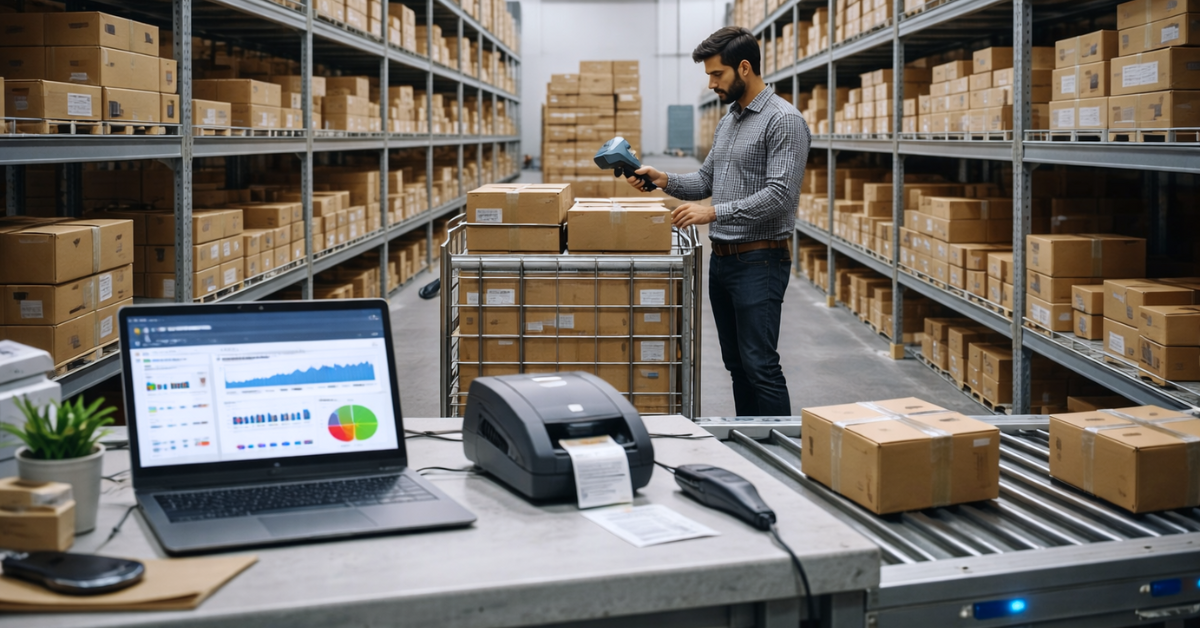
One of the most significant advantages of a tech-enabled 3PL is efficiency. These providers operate standardised processes designed to handle high volumes with consistency. Automation reduces manual effort, which in turn lowers error rates and processing times.
For e-commerce brands, this means orders move through the fulfillment cycle more smoothly, even as volumes increase or fluctuate.
Better Inventory and Order Visibility
Visibility is a common pain point for in-house operations. 3PLs address this by offering real-time dashboards and reporting tools. Brands can see inventory levels, order status, and fulfillment performance without relying on manual updates.
This level of insight supports better decision-making. It allows teams to plan replenishment more accurately, respond to demand changes, and communicate proactively with customers.
Flexible Fulfillment and Delivery Capabilities
E-commerce demand is rarely static. Seasonal peaks, promotions, and market expansion all require flexibility. A 3PL is designed to adapt to these changes without forcing brands to rebuild their internal operations.
Many providers also offer integrated delivery solutions, allowing fulfillment and last-mile delivery to function as a single, coordinated process. This reduces handoff issues and improves reliability.
Potential Challenges of Using a 3PL and How to Mitigate Them
Outsourcing fulfillment does come with considerations. Some brands worry about losing control or visibility. Others are concerned about onboarding complexity or communication gaps.
These challenges can be mitigated by choosing the right partner. Clear onboarding processes, transparent reporting, and defined communication channels are essential. A strong 3PL acts as an extension of the brand’s operations rather than a disconnected vendor.
Setting expectations early and maintaining regular check-ins helps ensure alignment over time.
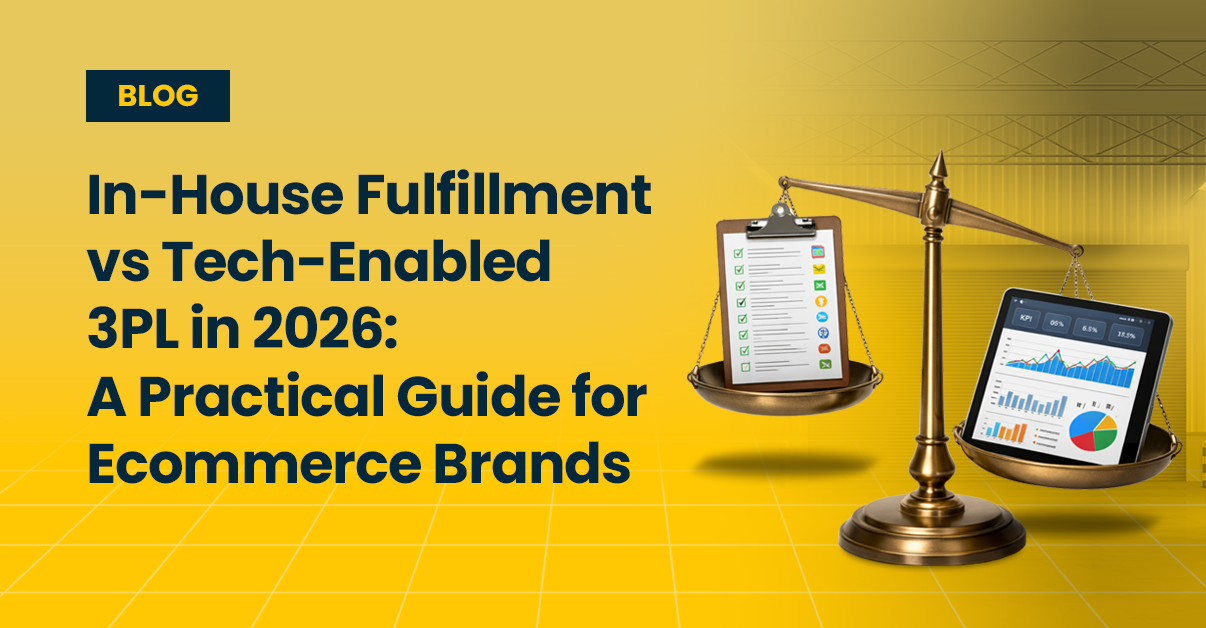
In-house Fulfillment vs 3PL: A Side-by-Side Comparison
When comparing in-house fulfillment and a 3PL, several factors stand out.
In-house fulfillment offers direct control but requires significant investment in labour, technology, and infrastructure. Scalability is limited by internal capacity, and risk is concentrated within the organisation.
A 3PL spreads operational risk, provides access to advanced systems, and supports scalable growth. While there is a cost associated with outsourcing, it is often more predictable and aligned with order volume.
Customer experience also differs. Integrated fulfillment and delivery processes typically result in more consistent service levels, particularly during periods of change.
Key Questions Canadian E-commerce Brands Should Ask Before Deciding
Before choosing between in-house fulfillment and a 3PL, brands should ask a few critical questions.
How variable is our order volume throughout the year?
Do we have the internal bandwidth to manage fulfillment as the business grows?
How important is real-time visibility into inventory and orders?
Are fulfillment issues impacting customer satisfaction or team productivity?
What level of geographic coverage do we need to support?
Answering these questions honestly helps clarify which model aligns best with long-term goals.
Why This Decision Looks Different for Canadian E-commerce Brands
Canada presents unique logistical challenges. Geographic distances are significant, population density varies widely, and delivery expectations differ by region.
Managing fulfillment and delivery across provinces requires careful coordination. Weather conditions, transit times, and regional carrier performance all influence outcomes.
For many Canadian brands, partnering with a 3PL provides access to infrastructure and delivery networks that would be difficult to build internally. It allows brands to serve customers reliably across the country without overextending their own operations.
Making the Right Fulfillment Choice for 2026 and Beyond
There is no one-size-fits-all answer to the fulfillment question. The right choice depends on a brand’s size, complexity, growth plans, and tolerance for operational risk.
What is clear is that fulfillment decisions have long-term implications. The model that works today must also support where the business is headed tomorrow.
So it is by evaluating options carefully and prioritising visibility, flexibility, and customer experience, that e-commerce brands can build operations that are resilient and ready for the future.
How Ecom Logistics Supports Smarter Fulfillment Decisions
Choosing the right fulfillment model is not about outsourcing for the sake of it. It is about finding a partner that understands the realities of modern e-commerce.
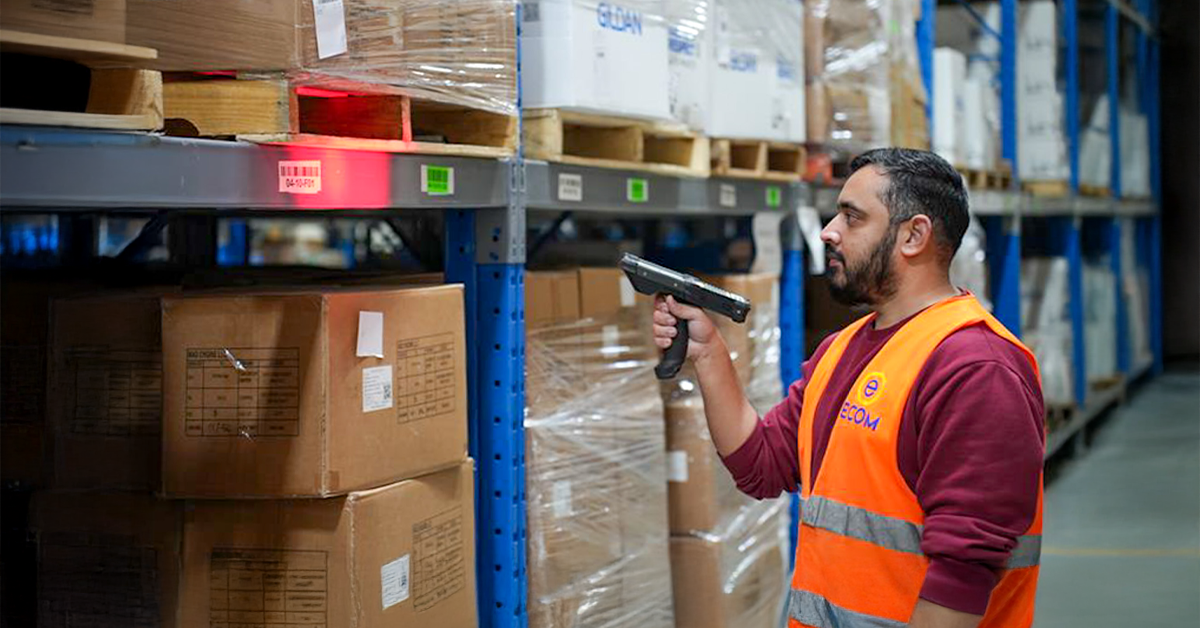
Ecom Logistics provides tech-enabled fulfillment and delivery solutions designed specifically for e-commerce brands operating in Canada. With integrated systems, real-time visibility, and scalable operations, the focus is on helping brands simplify logistics while maintaining control and transparency.
Whether you are transitioning from in-house fulfillment or optimising an existing setup, Ecom Logistics supports informed decisions that align with your business goals.
If you are evaluating your fulfillment strategy for 2026 and beyond, reaching out to the Ecom Logistics team is a practical next step. Contact Us.
- About the Author
- Latest Posts