A customer doesn’t remember how efficiently your warehouse processed their order. They remember whether it arrived on time, intact, and exactly the way they expected it.
That final stretch, from a local hub to the customer’s doorstep, has quietly become the most decisive part of the ecommerce experience. It’s where delivery promises are either fulfilled or broken. And for growing brands across Canada and the US, it’s also where costs rise, expectations tighten, and operational gaps start to show.
Last mile delivery is no longer just a logistics function. It’s a direct extension of your brand in 2026.
In this guide, we break down everything you need to know about last mile delivery in Canada. From how it works and why it’s so complex, to the challenges businesses face and the strategies that actually improve performance. You’ll also see how fulfillment and delivery must work together, what to look for in a logistics partner, and how to turn last mile delivery into a competitive advantage instead of a cost centre.
What Is Last Mile Delivery and Why Does It Matter?
What is Last Mile Delivery?
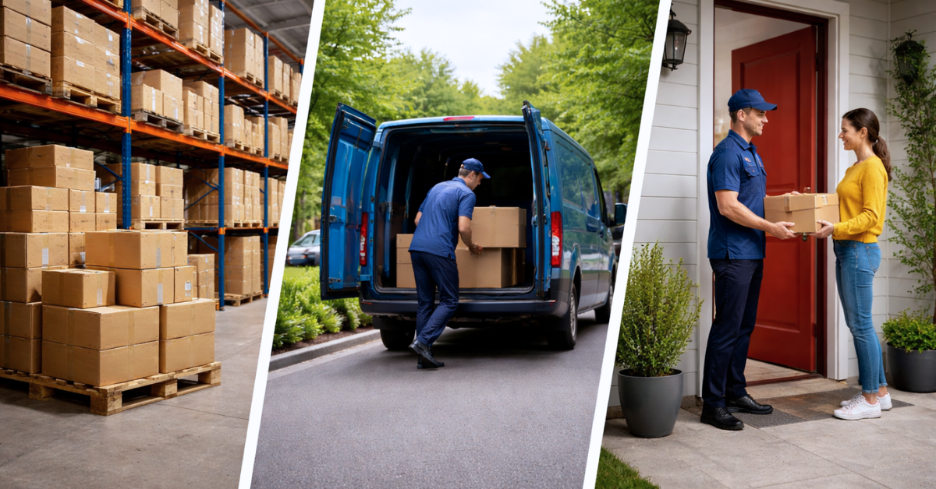
Last mile delivery refers to the final step in the order fulfillment process, where a package moves from a transportation hub or fulfillment centre to the customer’s doorstep.
It may sound simple, but this stage is anything but.
By the time an order reaches the last mile, most of the heavy lifting is already done. Inventory has been stored, picked, packed, and shipped across regions. What remains is the most complex and expensive part of the journey. Delivering individual orders to individual customers, often within tight time windows and high expectations.
This is what makes last mile delivery unique. It operates at the intersection of logistics efficiency and customer experience.
What is Final Mile Delivery? Is There a Difference?
You’ll often hear the terms “last mile delivery” and “final mile delivery” used interchangeably.
In practical terms, they mean the same thing. Both refer to the final leg of the delivery journey. Some companies prefer “final mile” to emphasize completion, while others use “last mile” as the industry standard.
For businesses, the terminology matters far less than the execution.
Where Last Mile Fits in the Ecommerce Supply Chain
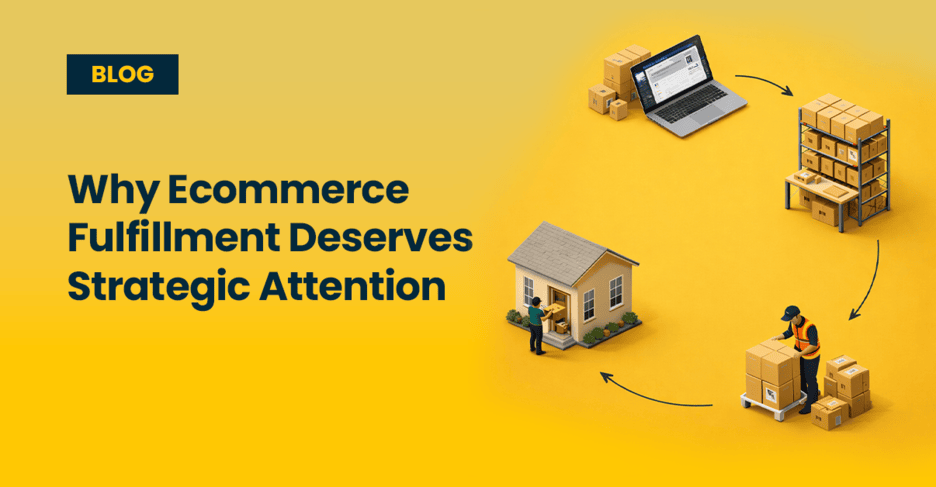
To understand its importance, it helps to look at the full flow:
- Inventory is stored in a fulfillment centre
- Orders are picked and packed
- Shipments move to regional or local distribution hubs
- From there, they are assigned for last mile delivery
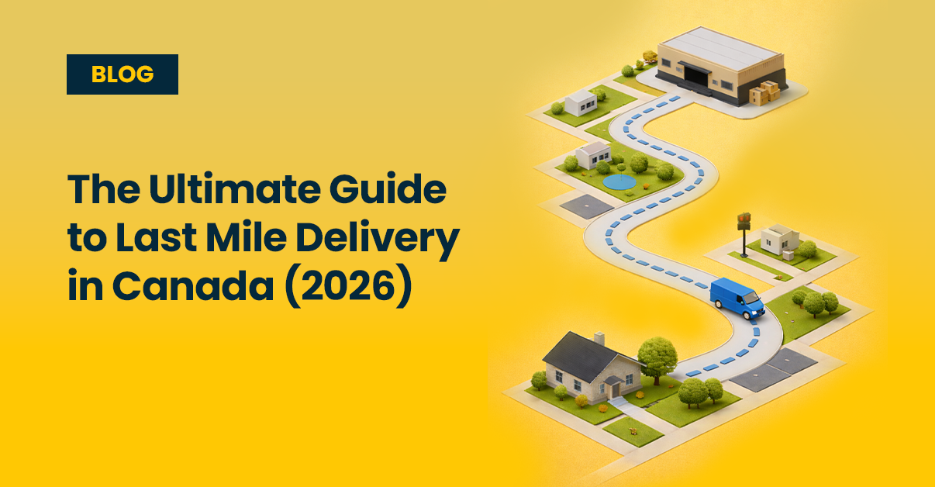
This final step is often described as warehouse to doorstep delivery, and it is where logistics shifts from bulk movement to individual delivery.
Unlike earlier stages, which benefit from scale and predictability, last mile delivery deals with fragmented routes, traffic conditions, missed deliveries, and real-time customer expectations.
That’s exactly why it accounts for a disproportionate share of total logistics costs, and why getting it right has such a direct impact on your customer experience.
Why Last Mile Delivery Is a Competitive Advantage in Canada
Last mile delivery has moved far beyond being a backend operation. For ecommerce brands in Canada, it has become a defining factor in how customers perceive speed, reliability, and overall service quality.
The Ecommerce Boom in Canada and Rising Expectations
Ecommerce growth across Canada has fundamentally changed what customers expect after clicking “buy”.
Two-day delivery was once considered fast. Now, many customers expect next day delivery as standard, and in urban areas, even same day delivery is becoming increasingly common. This shift is not just driven by large marketplaces, but by the overall maturity of ecommerce.
For growing brands, this creates pressure. Competing on product and price is no longer enough. Delivery speed and consistency now directly influence conversion rates and repeat purchases.
The Real Cost of Last Mile Delivery
Despite being the shortest part of the journey, last mile delivery is often the most expensive.
This is because it lacks the efficiencies of scale seen in earlier stages. Instead of moving bulk shipments between locations, businesses are delivering individual packages to individual addresses. Each stop adds time, fuel, and operational complexity.
Factors like traffic congestion, fuel costs, labour, and route inefficiencies all contribute to rising costs. For many businesses, last mile delivery can account for over half of total shipping expenses.
Customer Delivery Experience as a Brand Differentiator
Customers rarely separate delivery from the brand itself.
If a package arrives late, damaged, or without clear communication, it reflects directly on the business, not the delivery provider. On the other hand, a smooth and predictable delivery experience builds trust.
This includes:
- Accurate delivery timelines
- Real-time tracking updates
- Professional handoffs
- Flexible delivery options
Improving the customer delivery experience is no longer optional. It is one of the strongest levers for retention and long-term growth.
Canada-Specific Challenges and Opportunities
Operating in Canada brings a unique mix of challenges and advantages.
Urban centres like Toronto and Vancouver demand speed and efficiency, often making them suitable for same day or next day delivery models. At the same time, vast geographic distances and remote regions create logistical complexity and higher delivery costs.
Weather conditions, cross-border logistics with the US, and regional infrastructure differences further add to the challenge.
However, businesses that build the right delivery strategy can turn these constraints into a competitive edge. With the right network design, local delivery hubs, and reliable partners, brands can offer consistent service across regions while maintaining cost control.
How Last Mile Delivery Works: From Warehouse to Doorstep
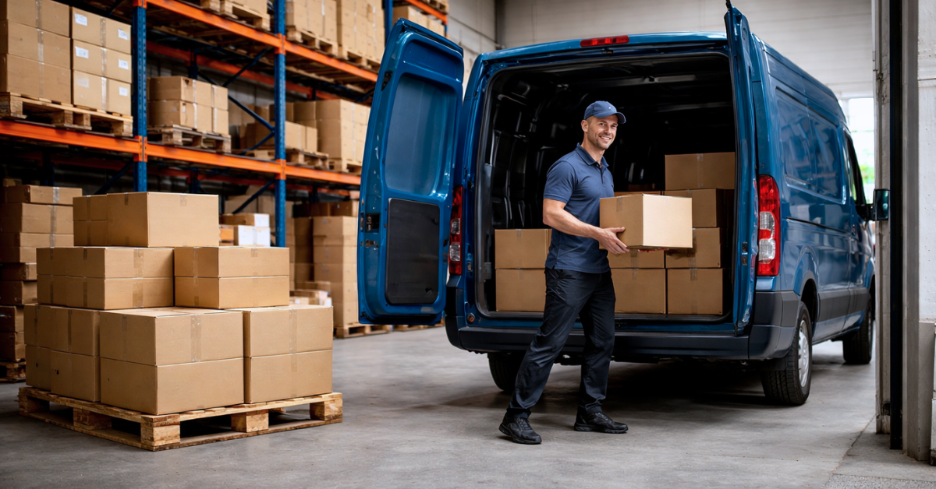
Understanding how last mile delivery works is essential for improving it. While the concept sounds straightforward, execution involves multiple moving parts that need to work together seamlessly.
Order Processing and Allocation
The process begins the moment an order is placed.
Once confirmed, the order is processed through a fulfillment centre, where items are picked, packed, and prepared for dispatch. The efficiency of this stage directly impacts how quickly an order can move into the delivery network.
Accurate inventory placement and fast processing times are critical here.
Local Delivery Hubs and Network Design
After packing, shipments are routed to regional or local delivery hubs.
These hubs act as staging points, allowing deliveries to be grouped based on geographic proximity. The closer these hubs are to the end customer, the faster and more cost-effective the delivery becomes.
This is why many logistics providers invest in distributed networks rather than relying on a single central warehouse.
Route Planning and Dispatch Optimization
Once packages are ready for delivery, routes are planned.
This involves grouping deliveries in a way that minimizes travel time and fuel consumption while meeting promised delivery windows. Advanced systems use real-time data, traffic conditions, and delivery priorities to optimize routes dynamically.
Poor route planning leads to delays, higher costs, and missed delivery windows.
The Role of the Last Mile Carrier
A last mile carrier is responsible for executing the delivery itself.
Some businesses manage this in-house, but many rely on specialized delivery providers who have the infrastructure, fleet, and local expertise required. These carriers handle scheduling, dispatch, and coordination of deliveries at scale.
Choosing the right last mile carrier can significantly impact both cost efficiency and service quality.
The Role of the Last Mile Driver
The last mile driver plays a critical role in the entire process.
They are not just responsible for transporting packages, but also for ensuring accurate, timely, and professional delivery. They deal with real-world challenges such as traffic, access issues, incorrect addresses, and customer availability.
Their performance directly affects the first attempt delivery success rate and overall customer satisfaction.
Final Delivery and Proof of Delivery
The final step is the handoff to the customer.
This includes verifying the delivery, capturing proof of delivery, and updating the system in real time. Many providers now offer contactless delivery, photo confirmation, and digital signatures to ensure transparency.
At this stage, everything comes together. A well-executed final delivery reinforces trust, while any failure becomes immediately visible to the customer.
Key Challenges in Last Mile Delivery (And Why They’re Hard to Solve)
Last mile delivery sounds straightforward in theory, but in practice, it is where most logistics operations start to break down. The complexity comes from scale, variability, and the direct involvement of the end customer.
High Operational Costs and Margin Pressure
Last mile delivery is widely recognized as the most expensive part of the shipping process.
Unlike long-haul transportation, which benefits from bulk movement, last mile operations deal with fragmented deliveries. Each order requires an individual stop, which increases fuel consumption, labour time, and vehicle usage.
As order volumes grow, so do delivery expectations. Businesses often find themselves spending more just to maintain the same level of service. Without optimization, this quickly eats into margins.
Failed Deliveries and Low First Attempt Success Rate
One of the biggest inefficiencies in last mile delivery is failed delivery attempts.
Missed deliveries happen for several reasons:
- Customers not available at the time of delivery
- Incorrect or incomplete addresses
- Limited access to delivery locations
Each failed attempt adds cost, delays the order, and negatively impacts the customer experience. Improving the first attempt delivery success rate is critical, but not easy without the right systems and communication in place.
Managing Customer Expectations at Scale
Customers expect accurate delivery timelines and real-time updates.
As businesses scale, maintaining this level of communication becomes challenging. Delays, lack of visibility, or unclear delivery windows can quickly lead to dissatisfaction.
The challenge is not just operational, but also perceptual. Even a slight delay can feel significant if expectations are not managed properly.
Fragmented Systems and Lack of Visibility
Many businesses operate with disconnected systems for fulfillment, shipping, and delivery.
This lack of integration creates blind spots. Without real-time visibility, it becomes difficult to track shipments, optimize routes, or proactively resolve issues.
A fragmented system often leads to reactive problem-solving instead of proactive optimization.
Sustainability Pressures and Regulatory Expectations in Canada
Sustainability is becoming a major factor in logistics decisions.
In Canada, both consumers and regulators are increasingly focused on reducing environmental impact. Frequent deliveries, inefficient routes, and traditional fuel-based vehicles contribute to higher emissions.
Businesses are now expected to adopt greener practices without compromising on speed or cost. Balancing these priorities adds another layer of complexity to last mile delivery.
Types of Last Mile Delivery Services Explained
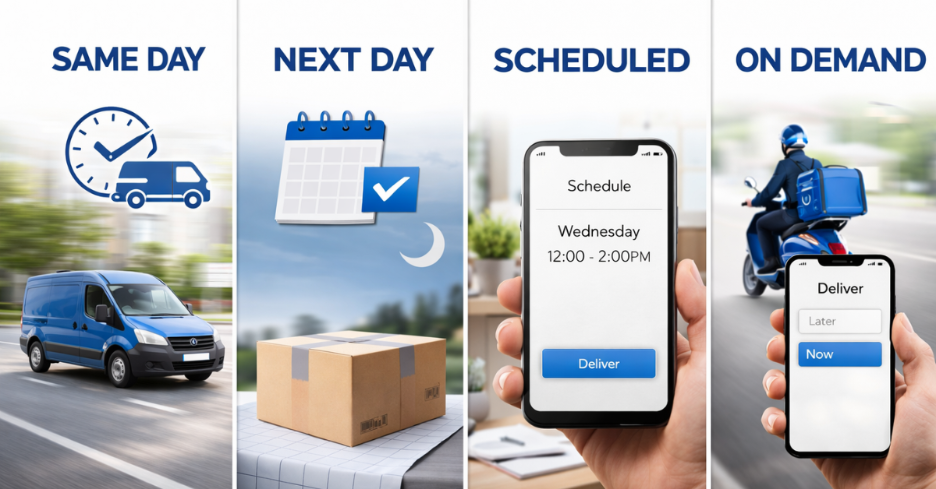
Not all deliveries are carried out the same way. The type of last mile delivery service a business offers can significantly impact cost, speed, and customer satisfaction.
Choosing the right mix depends on your product, customer expectations, and operational capabilities.
Same Day Delivery Services in Canada
Same day delivery is becoming increasingly popular in major urban centres.
It is particularly relevant for:
- High-demand consumer goods
- Perishable items
- Urgent or convenience-driven purchases
While it offers a strong competitive advantage, it also requires dense delivery networks, local inventory placement, and precise coordination.
Next Day Delivery Options Across Canada
Next day delivery strikes a balance between speed and cost.
It is often the most practical option for businesses looking to meet customer expectations without significantly increasing logistics expenses. With the right fulfillment network, next day delivery can be scaled efficiently across regions.
Scheduled Delivery Services
Scheduled delivery allows customers to choose a specific time window for receiving their orders.
This improves convenience and reduces the chances of failed deliveries. It also helps logistics teams plan routes more effectively by grouping deliveries within defined time slots.
On Demand Delivery Solutions
On demand delivery focuses on flexibility.
Orders are processed and delivered as they come in, often within a short time frame. This model is commonly used in food delivery and rapid commerce but is expanding into other ecommerce categories as well.
It requires real-time coordination, agile routing, and strong local delivery infrastructure.
Last Mile Delivery vs Last Mile Fulfillment: What Businesses Get Wrong
Last mile delivery and last mile fulfillment are often used interchangeably, but they refer to two very different parts of the operation. Confusing the two can lead to inefficiencies, delays, and higher costs.
What is Last Mile Fulfillment?
Last mile fulfillment refers to everything that happens before the delivery begins.
This includes:
- Inventory storage
- Order processing
- Picking and packing
- Preparing shipments for dispatch
It takes place inside a fulfillment centre and determines how quickly an order is ready to move into the delivery network.
Key Differences Between Fulfillment and Delivery
The difference is simple in theory but critical in execution.
- Fulfillment focuses on preparing the order
- Last mile delivery focuses on transporting it to the customer
However, in practice, these two functions are deeply connected. A delay or error in fulfillment directly impacts delivery timelines. Similarly, inefficient delivery planning can negate even the fastest fulfillment operations.
Why Integration Matters More Than Ever
Many businesses treat fulfillment and delivery as separate systems.
This creates gaps:
- Orders may be ready but not dispatched efficiently
- Delivery schedules may not align with order readiness
- Visibility is limited across the full journey
An integrated approach ensures that orders flow seamlessly from warehouse to doorstep delivery. This improves speed, reduces errors, and enhances overall efficiency.
How a 3PL Simplifies Both
A modern 3PL provider brings fulfillment and last mile delivery together under one system.
Instead of managing multiple vendors, businesses can rely on a single partner to:
- Store inventory strategically
- Process orders quickly and accurately
- Coordinate delivery in real time
This not only reduces operational complexity but also improves consistency across the entire customer journey.
Who Handles Last Mile Delivery in Canada?
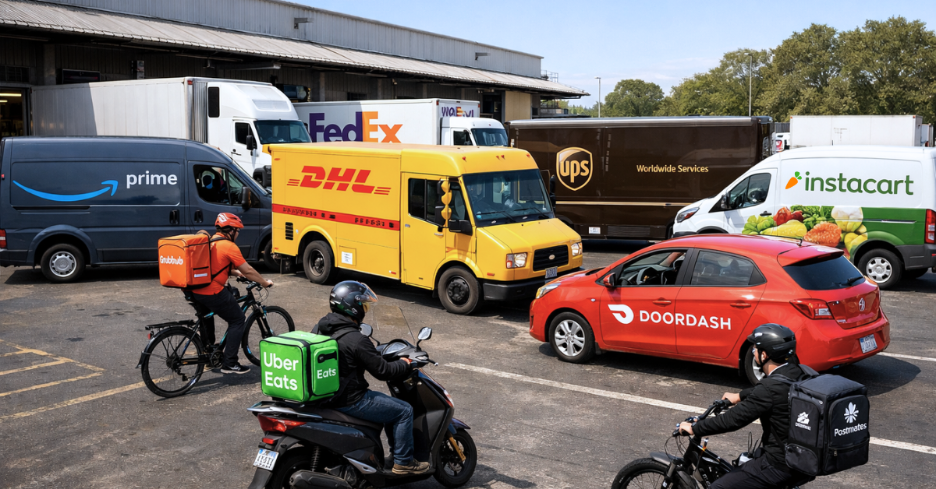
Last mile delivery in Canada is handled by a mix of large carriers, regional providers, and specialized logistics companies. Understanding this ecosystem is essential when choosing the right partner.
Types of Last Mile Delivery Providers
There are three main categories:
- National carriers
These providers offer wide coverage across Canada and often handle large volumes. They are reliable for scale but may lack flexibility.
- Regional carriers
These operate within specific provinces or cities and often provide faster, more localized service.
- Specialized last mile delivery providers
These focus specifically on final mile logistics solutions and often offer advanced capabilities like route optimization, real-time tracking, and flexible delivery options.
Logistics Networks in Major Cities Like Toronto
Cities like Toronto act as major logistics hubs.
They have dense delivery networks, making it easier to offer faster delivery options. This is where many shipping companies in Toronto operate, supported by local delivery hubs and strong infrastructure.
For businesses targeting urban customers, these networks provide a clear advantage in terms of speed and efficiency.
What Defines Top Logistics Companies in Canada
Not all providers offer the same level of service.
Top logistics companies in Canada typically stand out based on:
- Strong geographic coverage
- Advanced technology and tracking capabilities
- Reliable delivery performance
- Ability to scale with business growth
They go beyond just moving packages and focus on improving the overall customer delivery experience.
What to Look For in a Last Mile Delivery Partner
Choosing the right partner requires careful evaluation.
Key factors include:
- Coverage across your target regions
- Delivery speed options
- Technology integration with your systems
- Transparency and tracking capabilities
- Customer support and issue resolution
A strong last mile delivery provider should not just deliver packages but also contribute to operational efficiency and customer satisfaction.
Technology Driving Modern Last Mile Delivery
Technology is no longer a supporting function in logistics. It sits at the centre of how efficient, scalable, and reliable last mile delivery has become.
For businesses operating in Canada and expanding into the US, the difference between average and high-performing delivery operations often comes down to how well technology is used.
Route Optimization and AI-Driven Planning
Efficient routing is one of the biggest levers for reducing delivery costs and improving speed.
Modern systems use AI to analyze traffic patterns, delivery density, and time windows to create optimized routes. These systems can also adapt in real time, adjusting routes based on delays, cancellations, or new orders.
Without this level of optimization, businesses end up with longer delivery times, higher fuel costs, and lower driver productivity.
Real-Time Tracking and Visibility
Customers now expect to know exactly where their order is at any given moment.
Real-time tracking provides visibility not just for customers, but also for operations teams. It allows businesses to monitor delivery progress, identify delays, and take corrective action before issues escalate.
This level of transparency directly improves the customer delivery experience and reduces support queries.
Automation and Integration with Ecommerce Platforms
Seamless integration between ecommerce platforms, fulfillment systems, and delivery networks is critical.
When systems are connected:
- Orders flow automatically from checkout to dispatch
- Inventory updates in real time
- Delivery status is synchronized across platforms
Automation reduces manual errors, speeds up processing, and ensures consistency across the entire operation.
Data and Predictive Logistics
Data is what enables continuous improvement.
By analyzing delivery performance, businesses can identify patterns such as:
- Frequent delivery delays in specific areas
- High failure rates for certain time slots
- Inefficient routes or underutilised capacity
Predictive analytics takes this a step further by forecasting demand, helping businesses prepare in advance and allocate resources more effectively.
How to Improve First Attempt Delivery Success Rate
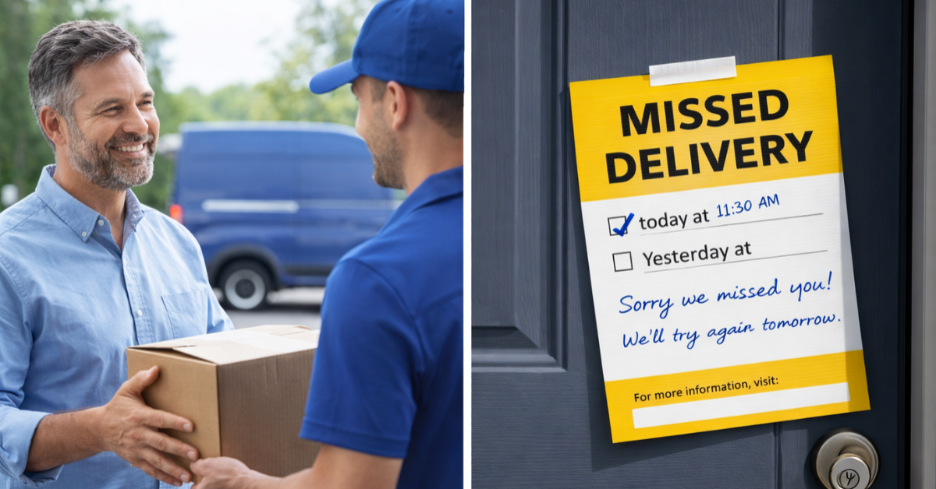
First attempt delivery success rate is one of the most important metrics in last mile delivery. It directly affects costs, efficiency, and customer satisfaction.
Every failed delivery attempt adds operational strain and delays the customer experience.
Why It Matters Financially and Operationally
Failed deliveries are expensive.
Each reattempt requires additional fuel, labour, and time. Over time, this significantly increases the overall cost of last mile delivery.
Operationally, it also disrupts route planning and reduces the number of successful deliveries per route.
Address Accuracy and Order Data
A surprising number of delivery failures are caused by incorrect or incomplete address information.
Ensuring accurate data at the order stage is critical. This includes:
- Proper address validation
- Clear delivery instructions
- Contact details for the customer
Even small errors can lead to delays or failed attempts.
Customer Communication and Delivery Windows
Clear communication reduces uncertainty.
Providing customers with accurate delivery windows and real-time updates increases the likelihood that they will be available to receive the package. Notifications before arrival, along with options to reschedule, can significantly improve success rates.
Role of Drivers and Last Mile Execution
Drivers play a key role in ensuring successful deliveries.
Their ability to navigate routes efficiently, communicate when needed, and handle unexpected situations impacts the outcome of each delivery. Well-trained drivers supported by the right tools can improve both efficiency and customer experience.
Improving first attempt delivery success rate is not about fixing a single issue. It requires alignment across systems, processes, and people.
How to Improve Customer Delivery Experience
Customer expectations around delivery have evolved rapidly. What was once considered a functional step is now a defining part of the overall brand experience.
For ecommerce businesses, improving the customer delivery experience is not just about speed. It is about consistency, communication, and trust.
Transparency and Communication
Customers want clarity.
From the moment an order is placed, they expect to know when it will arrive and what to expect along the way. Real-time tracking, proactive notifications, and clear delivery windows reduce uncertainty.
Even when delays occur, transparent communication helps maintain trust. Silence, on the other hand, leads to frustration.
Speed vs Reliability: Finding the Right Balance
Faster delivery is important, but reliability matters more.
Promising same day or next day delivery without the operational capability to consistently meet those timelines can damage credibility. Many businesses benefit more from offering slightly longer but highly reliable delivery windows.
The goal is to align delivery promises with actual performance.
Personalization and Flexibility in Delivery
Customers value control.
Options such as:
- Choosing delivery time slots
- Rescheduling deliveries
- Providing specific delivery instructions
These small touches improve convenience and reduce failed delivery attempts.
Flexible delivery options are especially important in urban areas, where customer availability can vary significantly.
Returns and Reverse Logistics Experience
Delivery does not end at the doorstep.
A smooth returns process is just as important as the initial delivery. Complicated or delayed returns can negatively impact the overall customer experience, even if the original delivery was flawless.
An efficient reverse logistics system ensures that returns are handled quickly, transparently, and with minimal effort for the customer.
Sustainable Last Mile Delivery in Canada
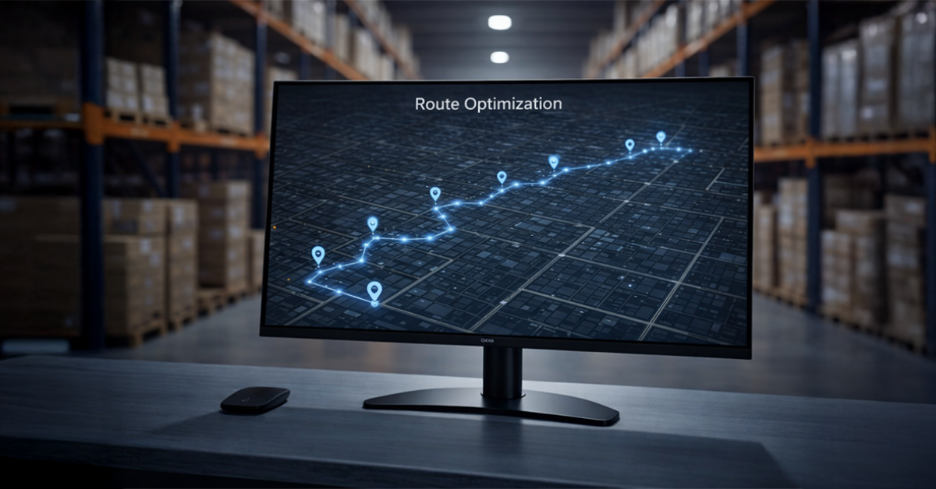
Sustainability is no longer a secondary consideration in logistics. It is becoming a core expectation for businesses operating in Canada.
Customers, regulators, and partners are increasingly paying attention to how deliveries impact the environment.
Environmental Impact of Last Mile Logistics
Last mile delivery contributes significantly to carbon emissions.
Frequent stops, urban congestion, and inefficient routing increase fuel consumption. As ecommerce volumes grow, so does the environmental footprint of delivery operations.
For businesses, this creates both a challenge and a responsibility.
Green Delivery Solutions and Practices
Reducing environmental impact requires a combination of strategy and execution.
Common approaches include:
- Using electric or low-emission delivery vehicles
- Optimizing routes to reduce unnecessary travel
- Establishing local delivery hubs closer to customers
- Consolidating shipments where possible
These practices not only reduce emissions but can also improve operational efficiency.
Why Sustainability Is Becoming a Business Requirement
Sustainability is increasingly influencing purchasing decisions.
Customers are more likely to support brands that demonstrate responsible practices. At the same time, regulations in Canada are gradually pushing businesses towards greener operations.
Adopting sustainable logistics is no longer just about compliance. It is about staying competitive in a market where expectations continue to evolve.
Future Trends in Last Mile Delivery (2026 and Beyond)
Last mile delivery continues to evolve as technology advances and customer expectations rise. What works today may not be sufficient tomorrow, especially for businesses aiming to scale across Canada and the US.
Understanding where the industry is headed helps businesses stay ahead rather than react.
Hyperlocal Fulfillment and Local Delivery Hubs
Speed increasingly depends on proximity.
Businesses are moving towards smaller, strategically placed fulfillment centres and local delivery hubs closer to customers. This reduces delivery time, lowers transportation costs, and enables faster service options.
Hyperlocal networks are especially effective in dense urban areas.
Autonomous Delivery and Emerging Technology
Automation is gradually entering the last mile.
From delivery robots to drones, emerging technologies are being tested to reduce reliance on manual processes. While large-scale adoption may still take time, these innovations signal a shift towards more efficient and scalable delivery models.
Increasing Demand for Faster, Flexible Delivery Models
Customer expectations will continue to push boundaries.
Same day and even instant delivery models are gaining traction. At the same time, customers expect flexibility in how and when they receive their orders.
Businesses will need to balance speed with operational feasibility to meet these expectations sustainably.
Data-Driven and Customer-Centric Logistics
Data will play an even bigger role in shaping delivery strategies.
From predicting demand to optimizing routes and personalizing delivery experiences, data-driven decisions will define successful logistics operations.
The focus is shifting from simply delivering packages to delivering better experiences.
How to Choose the Right Last Mile Delivery Partner

Choosing the right last mile delivery partner is one of the most important decisions for any ecommerce business. The right partner can improve efficiency, reduce costs, and enhance customer satisfaction. The wrong one can create ongoing operational challenges.
Key Factors to Evaluate
Not every provider offers the same capabilities. Businesses should assess partners based on:
- Coverage in Canada and the US – Ensure the provider can support your current operations and future expansion plans.
- Technology capabilities – Look for real-time tracking, route optimization, and seamless system integration.
- Delivery speed options – The ability to offer same day, next day, and scheduled delivery services.
- Cost structure – Transparent pricing that aligns with your delivery volumes and business model.
- Customer support – Reliable support for issue resolution and operational coordination.
Questions to Ask Before Choosing a Provider
Before finalizing a partner, it is important to ask:
- How do you ensure on time delivery logistics?
- What is your average first attempt delivery success rate?
- How do you handle delivery exceptions and delays?
- Can your systems integrate with our ecommerce and fulfillment platforms?
- What scalability options do you offer during peak demand?
These questions help uncover how well a provider can support your operations in real-world conditions.
Red Flags to Avoid
Certain warning signs can indicate potential issues:
- Lack of transparency in tracking and reporting
- Limited geographic coverage
- Inconsistent delivery performance
- Poor communication or delayed responses
A reliable last mile delivery provider should offer consistency, visibility, and the ability to scale with your business.
Why Businesses Are Outsourcing Last Mile Delivery
Managing last mile delivery in-house can quickly become complex and resource-intensive, especially as order volumes grow and customer expectations rise.
This is why many ecommerce businesses are choosing to outsource this function to specialized providers.
Cost Efficiency Without Compromising Performance
Building an in-house delivery network requires significant investment.
Fleet management, driver hiring, route planning systems, and infrastructure all add to operational costs. Outsourcing allows businesses to convert these fixed costs into variable ones, paying only for what they use.
At the same time, experienced providers bring efficiencies that are difficult to achieve internally.
Scalability During Growth and Peak Demand
Demand in ecommerce is rarely consistent.
Seasonal spikes, promotional campaigns, and market expansion can put pressure on delivery operations. Outsourcing provides the flexibility to scale up or down without operational strain.
This ensures consistent service levels even during high-demand periods.
Access to Expertise and Infrastructure
Last mile delivery requires specialised knowledge.
From optimising routes to managing delivery exceptions, experienced providers have systems and processes already in place. They also operate established networks of local delivery hubs, making it easier to offer faster delivery options.
This level of expertise is difficult to replicate in-house without significant time and investment.
Focus on Core Business Operations
Outsourcing allows businesses to focus on what they do best.
Instead of managing logistics complexities, teams can concentrate on product development, marketing, and customer growth. This shift in focus often leads to better overall business performance.
Conclusion: Turning Last Mile Delivery into a Growth Advantage with Ecom Logistics
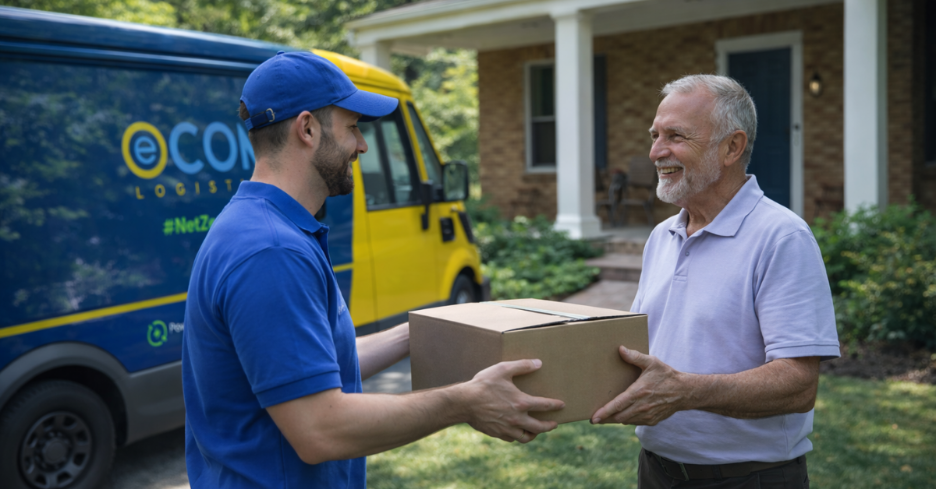
Last mile delivery in 2026 directly impacts customer satisfaction, brand perception, and long-term growth.
Businesses that treat it as an afterthought often struggle with rising costs, inconsistent service, and dissatisfied customers. On the other hand, those that invest in the right systems, processes, and partners turn it into a competitive advantage.
The key lies in integration.
When fulfillment and last mile delivery work together seamlessly, orders move faster, errors are reduced, and customers receive a more consistent experience. This is where many businesses see the biggest transformation.
For companies operating in Canada and expanding into the US, this becomes even more critical. Managing cross-regional logistics while maintaining delivery speed and reliability requires the right infrastructure and expertise.
This is where a partner like Ecom Logistics makes all the difference.
With integrated fulfillment and last mile delivery capabilities, a strong presence in Canada, and growing operations in the US, Ecom Logistics helps businesses streamline their logistics from warehouse to doorstep delivery. The focus is not just on moving packages, but on improving on time delivery logistics, increasing efficiency, and enhancing the overall customer delivery experience.
If you are looking to optimize your last mile delivery and build a more scalable logistics operation, it is the right time to rethink your approach.
Get in Touch with Ecom Logistics to Explore this Further.
Frequently Asked Questions
Last mile delivery is the process of transporting goods from a distribution point to the final destination. For ecommerce brands, last mile delivery determines how quickly and efficiently customers receive orders.
Final mile delivery is another term for last-mile delivery, referring to the same process of completing warehouse to doorstep delivery using a last mile carrier or last mile delivery provider.
Last mile fulfillment ensures inventory is stored, picked, and packed close to the customer. When combined with last mile delivery in Canada, it enables faster shipping, including next day delivery in Canada and same day delivery service in Canada.
Last mile delivery in Canada is complex due to urban congestion, long distances, and individual deliveries. This makes efficient final mile logistics solutions essential for ecommerce logistics.
A last mile carrier manages the transportation of goods from a local hub to the customer, ensuring on time delivery logistics and smooth execution of last mile delivery.
A last mile driver completes deliveries, manages routes, and interacts with customers. Their efficiency impacts first attempt delivery success rate and customer delivery experience in last mile delivery (Canada).
Shipping companies in Toronto rely on local delivery hubs, route optimization, and technology to provide same day delivery service in Canada as well as scheduled delivery services.
Last mile delivery (Canada) includes same day delivery service Canada, next day delivery Canada, scheduled delivery service, and on demand delivery solutions.
Final mile logistics solutions include route optimization, delivery tracking, and automation tools that improve last mile delivery efficiency and reduce costs.
Local delivery hubs reduce delivery distances and enable faster warehouse to doorstep delivery, improving on time delivery logistics in last mile delivery in Canada.
First attempt delivery success rate measures how often deliveries are completed on the first try, improving efficiency in last mile delivery in Canada.
On time delivery ensures timely deliveries, which directly improves customer delivery experience in ecommerce logistics.
Top logistics companies in Canada stand out through strong infrastructure and reliable last mile delivery provider networks.
Sustainable logistics (Canada) focuses on reducing emissions through green delivery solutions in last mile delivery in Canada.
Green delivery solutions include eco-friendly vehicles and optimized routes that reduce environmental impact in last mile delivery in Canada.
The best last mile delivery provider like Ecom Logistics, should offer strong coverage, technology, and reliable last mile delivery services in Canada.
Ecom Logistics provides integrated last mile fulfillment, last mile delivery, on demand delivery solutions, and strong on time delivery logistics in Canada.
Ecom Logistics offers scalable final mile logistics solutions, better first attempt delivery success rate, and improved customer delivery experience, along with being eco-friendly.
The future of last mile delivery in Canada includes automation, AI-driven routing, and increased use of on demand delivery solutions along with sustainable logistics.
Ecommerce brands can reduce last mile delivery costs in Canada by optimising route planning, using local delivery hubs, improving first attempt delivery success rate, and partnering with an efficient last mile delivery provider like Ecom Logistics. Integrating last mile fulfillment with delivery also reduces delays and operational inefficiencies, helping improve overall cost efficiency.
- About the Author
- Latest Posts