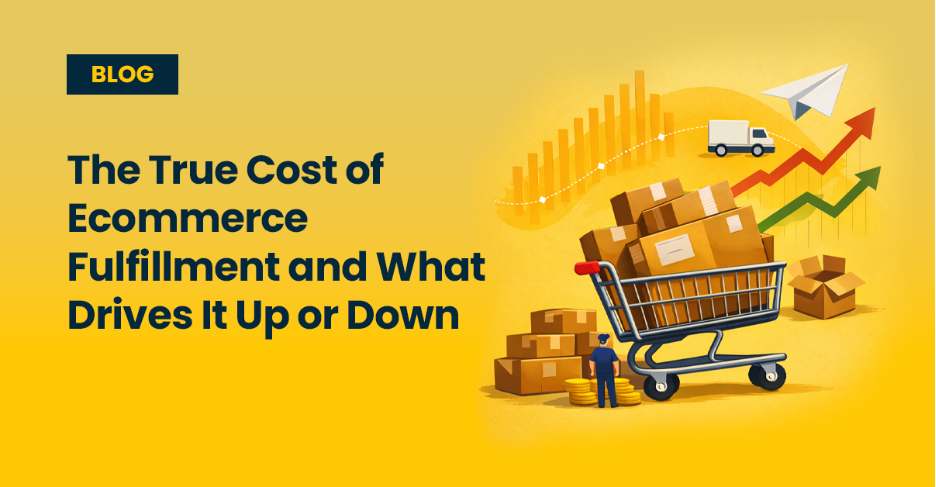
Margins look healthy at a topline level. Orders are growing. Revenue is steady. Yet profitability feels tighter every quarter. The reason is rarely one big cost. It is the accumulation of small inefficiencies across storage, handling, shipping, and returns. Together, these define your ecommerce fulfillment costs, and more importantly, how much control you have over them.
Fulfillment is not a fixed expense. It is a system that either scales efficiently or becomes more expensive as you grow. This is where many brands struggle. What worked at 200 orders a day starts breaking at 2,000. Costs rise, but visibility does not.
This blog breaks down where your fulfillment spend really goes, what drives it up or down, and where most businesses unknowingly lose margin.
Where Does Your Fulfillment Spend Actually Go? A Practical Cost Breakdown
At a glance, most brands think of fulfillment as storage plus shipping. In reality, the ecommerce fulfillment cost breakdown is far more layered. Each stage in the process adds cost, and inefficiencies at any point compound quickly as order volumes grow.
Storage and Inventory Holding Costs
Storage is not just about paying for space. It is about how efficiently that space is used.
Warehouse and storage costs ecommerce businesses incur depend on factors like inventory turnover, SKU mix, and how long products sit unsold. Slow-moving inventory increases holding costs and reduces available space for faster-selling items. This leads to higher storage fees or the need for additional warehouse capacity.
There is also a structural difference between fixed and variable storage costs. In in-house setups, costs remain fixed regardless of how efficiently space is used. In outsourced models, storage is often billed based on actual usage, but poor inventory planning can still drive costs up.
At scale, even small inefficiencies in storage allocation can significantly impact overall fulfillment costs.
Picking, Packing, and Operational Labour
Labour is one of the most direct contributors to cost in ecommerce fulfillment.
Every order requires picking items from storage, packing them correctly, and preparing them for dispatch. The complexity of this process increases with:
- Higher SKU counts
- Multi-item orders
- Custom packaging requirements
Inefficient warehouse layouts, lack of process standardisation, or manual workflows increase handling time per order. This directly raises labour costs and reduces throughput.
As order volumes grow, businesses often add more staff instead of improving systems. This creates a linear cost increase rather than operational efficiency. The result is higher fulfillment costs without proportional gains in output.
Shipping and Delivery Costs Across Zones
Shipping is often the most visible part of ecommerce shipping and fulfillment costs, but also one of the least optimised.
Costs vary based on:
- Delivery distance and zones
- Package weight and dimensions
- Delivery speed expectations
- Carrier selection
As brands expand geographically, shipping costs increase non-linearly. Delivering across regions or internationally introduces additional surcharges, longer transit times, and more complex routing.
For example, ecommerce fulfillment costs in Canada are heavily influenced by geography. Large distances between population centres increase last-mile costs, making distributed warehousing almost essential for maintaining cost efficiency.
Without optimised carrier allocation and warehouse placement, shipping quickly becomes a major cost driver.
Returns and Reverse Logistics
Returns are often underestimated, but they directly impact profitability.
Each return involves:
- Reverse shipping costs
- Inspection and quality checks
- Restocking or disposal
- Additional handling
High return rates can significantly increase operational costs. Poor returns management further adds inefficiencies, from delayed restocking to inventory inaccuracies.
When not managed proactively, reverse logistics becomes one of the most expensive and least visible components of fulfillment.
Why Your Fulfillment Costs Keep Increasing as You Scale
Growth is expected to improve efficiency. In fulfillment, that is only true when operations are designed for scale. Otherwise, costs rise faster than revenue.
Volume Growth Without Operational Efficiency
Higher order volumes should ideally reduce cost per order through economies of scale. In practice, many businesses experience the opposite.
This happens when:
- Processes remain manual
- Warehouse layouts are not optimised
- Inventory is not strategically positioned
Instead of improving efficiency, businesses add more labour and space to manage increased demand. Costs grow in proportion to volume, or worse, outpace it.
Without process optimisation, scaling simply amplifies inefficiencies.
Expanding Into New Regions and Markets
Geographic expansion introduces complexity that directly impacts ecommerce fulfillment costs.
Shipping to new regions increases:
- Transit distances
- Carrier dependencies
- Delivery timelines
Cross-border expansion adds further layers such as customs, duties, and regulatory compliance. These are not always predictable, making cost control more difficult.
Taking Canada again as an example, the combination of large geography and dispersed population centres means that ecommerce fulfillment costs in Canada can rise sharply without a distributed fulfillment strategy.
Expansion without infrastructure alignment almost always leads to higher costs and inconsistent delivery performance.
Rising Customer Expectations
As per McKinsey more than 90 percent of consumers say they are likely to abandon an online purchase if they learn it will involve high shipping costs. More than 80 percent of consumers aged 55 and over say they will not pay for two-day shipping. About 50 percent of consumers overall say they are unwilling to pay anything for shipping regardless of delivery speed.
Shipping charges aside, faster delivery, real-time tracking, and seamless returns are now baseline expectations. But meeting these standards increases ecommerce shipping and fulfillment costs, especially when systems are not built for speed.
At the same time, reliability is just as important as speed. Missed delivery timelines lead to higher return rates, increased support queries, and reduced customer trust.
Balancing cost and customer experience is where most fulfillment strategies either succeed or fail.
The Hidden Fulfillment Costs That Quietly Kill Margins
Most businesses track their primary expenses. Fewer track the leakages that sit between processes. These are the hidden ecommerce fulfillment costs that rarely appear in dashboards but consistently impact margins.
Inventory Inaccuracies and Shrinkage
Inventory discrepancies create a chain reaction of costs. Miscounts lead to overselling, stockouts, and emergency replenishment. Each of these increases operational strain and often results in expedited shipping costs to recover customer experience.
Shrinkage, whether due to damage, misplacement, or theft, directly reduces sellable inventory. Over time, this distorts forecasting and increases holding costs, especially when safety stock levels are raised to compensate.
Packaging Inefficiencies
Packaging is often treated as a fixed cost. In reality, it is highly optimisable.
Oversized packaging increases dimensional weight, which directly raises ecommerce shipping and fulfillment costs. On the other hand, inconsistent packaging processes slow down packing speed and increase labour time per order.
Brands that do not standardise packaging or optimise for product dimensions end up paying more per shipment without improving customer experience.
Failed Deliveries and Reattempt Costs
Delivery failures are rarely accounted for in initial cost calculations.
Incorrect addresses, unavailable customers, or carrier issues result in:
- Reattempt delivery fees
- Additional last-mile costs
- Increased return-to-origin shipments
Each failed delivery effectively doubles the cost of that order’s shipping and handling. At scale, even a small percentage of failed deliveries can significantly increase overall fulfillment spend.
Customer Support Load Linked to Fulfillment
Fulfillment inefficiencies do not stay within operations. They spill into customer service.
Delayed shipments, incorrect orders, and return issues increase support tickets. This adds indirect costs through:
- Larger support teams
- Longer resolution times
- Reduced customer satisfaction
While these costs are often attributed to customer experience teams, their root cause is frequently fulfillment-related.
Over time, this creates a disconnect where fulfillment inefficiencies are underestimated, and customer service costs appear disproportionately high.
What Really Drives Your Cost Per Order in Ecommerce Fulfillment?
Understanding the factors affecting ecommerce fulfillment costs is critical because they determine how efficiently your operation can scale over time. It is not just a metric. It is the clearest indicator of whether your fulfillment strategy is scalable.
At its core, cost per order includes storage, handling, packaging, and shipping. However, what drives it up or down depends on operational realities.
Order Complexity and SKU Variation
Single-item orders are straightforward. Multi-item orders increase picking time, packing complexity, and error probability.
A higher number of SKUs also makes inventory management more demanding. It increases the likelihood of mispicks and slows down operations, raising labour costs per order.
Brands with wide product catalogues often see higher fulfillment costs unless processes are tightly optimised.
Handling Requirements and Product Type
Not all products move through fulfillment systems the same way.
Fragile items require additional packaging. Bulky products increase handling time and storage space. Temperature-sensitive goods need specialised infrastructure.
Each added requirement increases both time and cost per order. Without process optimisation, these costs scale rapidly with volume.
Technology and Process Maturity
Manual operations increase dependency on labour. Automated or system-driven workflows improve speed and accuracy.
Warehouse management systems, barcode scanning, and order routing logic reduce errors and handling time. This directly lowers cost per order while improving throughput.
Businesses that delay investment in technology often compensate with higher labour, which becomes unsustainable as volumes grow.
Inventory Placement and Order Routing
Where inventory is stored has a direct impact on fulfillment cost.
Centralised storage may reduce storage costs but increase shipping expenses due to longer delivery distances. Distributed inventory reduces shipping zones but requires better coordination and forecasting.
Efficient inventory placement can significantly reduce ecommerce shipping and fulfillment costs while improving delivery timelines. Poor placement does the opposite.
In House vs 3PL Fulfillment Cost Comparison: What Changes at Scale?
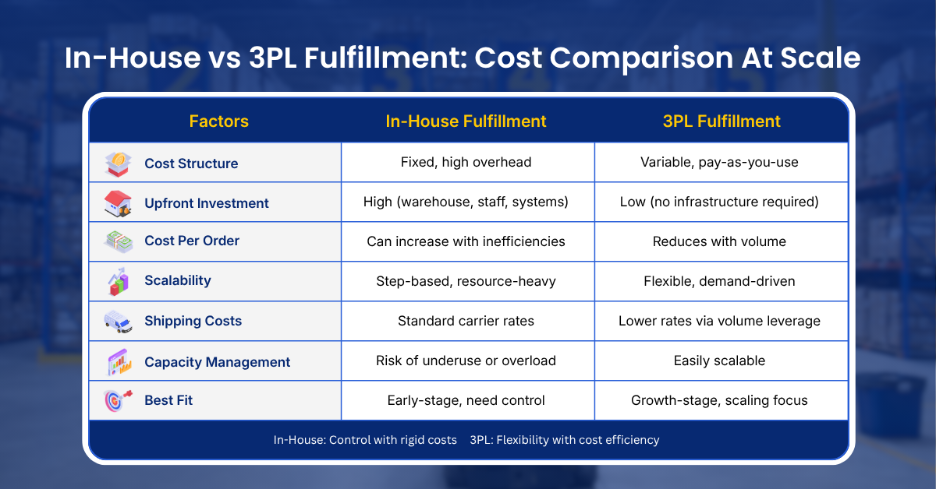
For many growing brands, the transition from in-house to 3PL fulfillment happens when operational complexity starts increasing faster than internal efficiency.
Cost structures in fulfillment are not static. They evolve with order volume, geographic reach, and operational complexity. This is where the in house vs 3PL fulfillment cost comparison becomes critical.
Fixed Cost Burden of In-House Operations
In-house fulfillment offers control, but at a cost.
Expenses include:
- Warehouse leasing or ownership
- Staffing and training
- Equipment and systems
- Ongoing operational management
These are largely fixed costs. Even when order volumes fluctuate, the infrastructure remains in place. During slower periods, this leads to underutilisation. During peak periods, it often results in capacity constraints.
As volumes grow, scaling requires additional space, more staff, and increased coordination. Costs rise in steps rather than adjusting smoothly with demand.
For many businesses, this creates inefficiencies where costs increase faster than operational output.
3PL Fulfillment Costs Explained in Practice
A third-party logistics model introduces a different cost structure.
In 3PL fulfillment, pricing is typically variable and linked to actual usage:
- Storage based on space utilised
- Fees per pick, pack, and order processed
- Shipping costs based on negotiated carrier rates
Because infrastructure is shared across multiple clients, 3PL providers achieve economies of scale that individual brands often cannot.
This leads to:
- Lower per-order handling costs at higher volumes
- Better shipping rates due to aggregated volume
- Reduced need for upfront investment
The key advantage is flexibility. Costs scale with demand, making it easier to manage both growth and fluctuations.
When The Cost Equation Starts Favouring 3PL
The shift from in-house to 3PL is rarely about preference. It is about efficiency.
This transition typically becomes favourable when:
- Order volumes exceed internal capacity
- Geographic expansion increases shipping complexity
- Labour and infrastructure costs begin to outpace growth
At this stage, continuing in-house operations often results in rising ecommerce fulfillment costs without corresponding improvements in speed or accuracy.
A 3PL does not just reduce costs. It restructures them into a more scalable model.
For growing brands, the decision is less about whether to outsource and more about when.
Why Fulfillment Is One of the Biggest Cost Centres in Ecommerce Today
Customer acquisition costs are rising. Inventory ties up capital. Yet, for many brands, ecommerce fulfillment costs quietly become the largest operational expense over time.
The reason is simple. Fulfillment sits at the intersection of multiple cost layers. Every order touches storage, labour, packaging, shipping, and often returns. Unlike marketing, which can be scaled up or down, fulfillment operates continuously. Every inefficiency repeats with every order.
What makes this more complex is the lack of clear visibility. Many businesses track shipping costs closely but underestimate the cumulative impact of handling, storage, and reverse logistics. When combined, these often rival or exceed customer acquisition spend.
There is also a structural shift happening. Faster delivery expectations, more flexible return policies, and higher service standards are increasing ecommerce shipping and fulfillment costs across the board. These are not temporary pressures. They are becoming baseline requirements.
This is why profitability feels harder to maintain, even when revenue is growing. Fulfillment is no longer just a backend function. It is one of the primary drivers of margin performance.
Should You Continue Managing Fulfillment In-House or Outsource It?
The decision to manage fulfillment internally or move to a third-party provider is rarely straightforward. It depends on how your cost structure evolves as your business grows.
When In-House Fulfillment Still Makes Sense
In-house operations are often effective when:
- Order volumes are stable and manageable
- Products require strict quality control or custom handling
- Geographic reach is limited
At this stage, the control offered by in-house fulfillment can justify the fixed cost structure. Processes are easier to oversee, and customer experience can be tightly managed.
However, this model assumes that growth will remain predictable. Once variability increases, limitations start to surface.
When Outsourcing Becomes More Cost Efficient
Outsourcing through a 3PL becomes more viable when:
- Order volumes begin to fluctuate or grow rapidly
- Expansion into new regions increases shipping complexity
- Internal resources are stretched across operations
At this point, the in house vs 3PL fulfillment cost comparison starts to shift. Fixed costs in in-house setups become harder to justify, especially when utilisation is inconsistent.
A 3PL introduces flexibility. Costs align more closely with actual order volume, and infrastructure scales without requiring continuous capital investment.
A Practical Decision Framework
Rather than treating this as a binary choice, it helps to evaluate three factors:
- Cost predictability: Are your fulfillment costs stable or becoming harder to control?
- Operational strain: Is your team spending more time managing fulfillment than growing the business?
- Scalability: Can your current setup handle sudden spikes in demand without compromising delivery timelines?
If the answer to any of these is uncertain, it is usually an indication that your current model is reaching its limits.
The goal is not just to reduce costs. It is to create a fulfillment system that can scale without constant intervention.
How To Reduce Ecommerce Fulfillment Costs Without Compromising Customer Experience
Reducing ecommerce fulfillment costs is not about cutting corners. It is about removing inefficiencies while maintaining, or improving, delivery performance. The focus should always be on lowering cost per order without negatively impacting customer experience.
Optimising Inventory Placement and Turnover
Inventory that sits too long increases warehouse and storage costs ecommerce businesses incur. At the same time, poorly distributed inventory increases shipping distances and delivery timelines.
Improving turnover through better demand forecasting and SKU rationalisation reduces holding costs. Placing inventory closer to key customer regions lowers shipping zones and speeds up delivery.
This is one of the most direct ways to reduce both storage and ecommerce shipping and fulfillment costs simultaneously.
Reducing Handling and Packaging Inefficiencies
Handling time directly affects cost per order ecommerce fulfillment.
Optimising warehouse layouts, standardising picking processes, and reducing unnecessary movement within facilities can significantly improve efficiency. Even small reductions in handling time per order create meaningful savings at scale.
Packaging also plays a critical role. Right-sized packaging reduces dimensional weight charges and lowers shipping costs. Standardised packaging processes improve speed and consistency.
Leveraging Technology to Improve Accuracy and Speed
Manual processes increase both cost and error rates.
Implementing warehouse management systems, barcode scanning, and automated workflows improves accuracy in picking and packing. This reduces mispicks, returns, and reprocessing costs.
Technology also improves visibility. Real-time tracking of inventory and orders enables better decision-making, reducing inefficiencies across the fulfillment cycle.
Over time, this leads to a lower and more predictable cost structure.
Partnering With The Right Fulfillment Provider
For many growing brands, cost optimisation reaches a limit internally.
A well-structured 3PL brings:
- Shared infrastructure
- Optimised processes
- Better carrier rates
This directly impacts 3PL fulfillment costs in practice, where per-order costs reduce as volume increases.
The right partner does not just execute orders, they also improve how fulfillment operates as a system.
Conclusion: Fulfillment Costs Are Not Fixed, They Are Designed
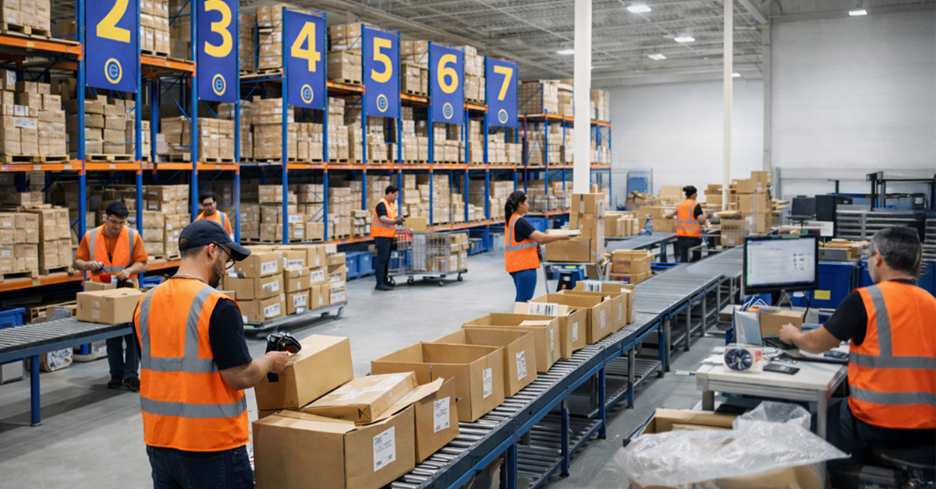
Ecommerce businesses often treat fulfillment as a necessary expense. In reality, it is one of the most controllable drivers of profitability.
Every component, from storage and handling to shipping and returns, contributes to ecommerce fulfillment costs. When these are not actively optimised, inefficiencies compound as order volumes grow. What starts as manageable overhead turns into a significant margin constraint.
The difference between high-growth brands that scale profitably and those that struggle often comes down to how fulfillment is structured, particularly when scaling ecommerce fulfillment in Canada across large geographic regions and rising delivery expectations.
Ecom Logistics works with ecommerce businesses to design fulfillment systems that are built for scale. From optimised inventory placement to efficient order processing and reliable delivery networks, the focus is on reducing cost without compromising performance.
Whether you are evaluating in house vs 3PL fulfillment, expanding into new regions, or trying to improve your current cost per order, the right fulfillment strategy can create measurable impact.
If your fulfillment costs are rising without clear visibility on why, it may be time to rethink the system behind them.
Speak to Ecom Logistics and explore how your fulfillment can become more efficient, scalable, and cost-effective.
Frequently Asked Questions
Fulfillment costs should be reviewed regularly, ideally every quarter. As order volumes, shipping zones, and product mixes change, costs can shift quickly. Regular audits help identify inefficiencies early and prevent margin erosion.
Common signs include increasing cost per order, slower processing times, rising return rates, and more frequent customer complaints related to delivery. These usually indicate underlying issues in processes, inventory management, or shipping strategy.
As businesses grow, operational costs increase alongside revenue. Without efficient systems, ecommerce fulfillment costs rise due to higher shipping distances, labour needs, and returns, making profitability harder to maintain.
Returns add reverse shipping, inspection, and restocking costs. High return rates can significantly increase total fulfillment expenses and reduce margins.
Yes. Automation and warehouse management systems reduce errors, improve speed, and lower labour dependency, leading to lower overall costs.
If your costs are increasing faster than order volume or impacting margins despite steady growth, it indicates inefficiencies in your fulfillment system.
It depends on scale. In-house works at lower volumes, but as operations grow, a 3PL model often reduces cost per order in ecommerce fulfillment through better infrastructure and shipping rates.
Given the size and distribution challenges, many brands rely on 3PL providers with multiple warehouse locations to reduce ecommerce fulfillment costs in Canada and improve delivery timelines.
- About the Author
- Latest Posts