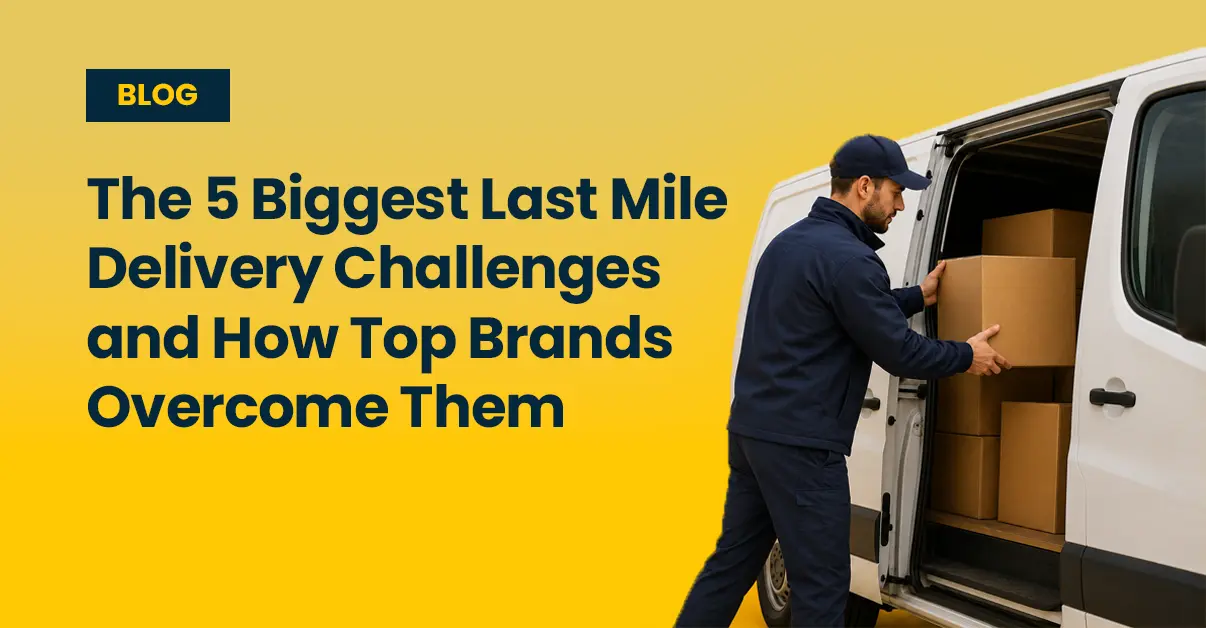
The last mile is the shortest part of the delivery journey, yet the most expensive. And this is where operational complexity peaks, customer experience is decided, and margins are most vulnerable. For ecommerce brands, understanding the core last mile delivery challenges is the very foundation of a successful fulfillment strategy.
Moreover, in Canada, these challenges are compounded by geography, climate, and customer delivery expectations that are benchmarked against global delivery standards. This blog breaks down the five biggest last mile delivery challenges, why they matter, and what brands are doing to address them effectively.
Why Last Mile Delivery Challenges in Canada Are Unique
Canada presents delivery conditions that require genuine local expertise to navigate. The combination of dense urban corridors, vast rural distances, and extreme seasonal weather creates an operating environment that standard logistics models are not always built for.
Urban Density vs. Rural Sprawl
Toronto, Montreal, and Vancouver are among the most densely populated urban markets in North America. Managing deliveries in these cities means dealing with congestion, parking restrictions, and multi-unit residential buildings where access protocols vary by building.
At the same time, a significant portion of Canada’s population lives outside major centres, where delivery route density is low and cost per order rises sharply.
Urban deliveries typically cost around $10 per package, while rural deliveries can reach $50 or more due to distance and reduced delivery density. Serving both markets reliably requires very different operational approaches.
Weather and Seasonal Disruptions
Canadian winters create delivery conditions that affect speed, vehicle performance, and route planning in ways that are difficult to eliminate entirely. Ice, snow, and reduced daylight hours slow routes and increase the risk of missed delivery windows. Seasonal demand spikes, particularly around peak retail periods, compound the operational pressure further.
Brands that partner with logistics providers experienced in Canadian conditions are better positioned to maintain performance through these periods than those relying on carriers without that operational history.
Rising Customer Expectations in a Competitive Market
Canadian shoppers are benchmarking delivery expectations against global standards set by Amazon and major international retailers. 98% of consumers say the delivery experience directly impacts their brand loyalty, according to industry research. That figure makes the last mile one of the most consequential touchpoints in the entire customer journey. The last mile delivery challenges that brands face operationally translate directly into outcomes customers experience and remember.
The 5 Last Mile Delivery Challenges Ecommerce Brands Need to Solve
Last mile delivery challenges do not exist in isolation. Each one affects cost, customer experience, and operational efficiency simultaneously. Understanding what drives them is the first step toward building a delivery operation that performs consistently at scale.
Challenge 1: High Last Mile Delivery Costs
Cost is one of the most persistent last mile delivery challenges for ecommerce brands at every stage of growth. The final leg of the supply chain is disproportionately expensive relative to the distance covered.
What Drives Last Mile Costs Up
Last mile delivery accounts for 53% of total shipping costs, despite covering only the final portion of the journey. The cost concentration is structural: delivering individual packages to dispersed residential addresses is far less efficient than consolidated freight moving between distribution hubs.
Fuel surcharges, peak season fees, residential delivery charges, and extended area penalties from national carriers can quickly increase shipping costs beyond the base rate initially quoted. For ecommerce brands managing high order volumes, these additional charges can have a significant impact on overall delivery margins.
How Top Brands Keep Costs Under Control
The most effective lever is delivery density. When orders in a given area are consolidated into a single route within a defined delivery window, cost per order drops significantly.
Working with a logistics partner that operates its own owned fleet rather than relying solely on national carriers removes several layers of surcharges and provides more transparent, predictable pricing. For a detailed look at how the cost structure works across different delivery models, the Ultimate Guide to Last-Mile Delivery in Canada is a useful reference.
Challenge 2: Failed Deliveries and Re-Delivery Attempts
Failed deliveries carry a cost that compounds quickly across volume. Research by Loqate found that a single failed delivery costs an average of $17.20 per order, and 24% of businesses report that more than 1 in 10 of their deliveries fail on the first attempt. At scale, those figures represent a substantial operational expense that directly erodes margin.
Why Failed Deliveries Happen
The most common causes are recipients not being home, incorrect or incomplete address information, and access issues at multi-unit residential buildings.
In dense urban markets like Toronto and Montreal, building access protocols and concierge requirements add a layer of complexity that not all carriers are equipped to handle consistently.
Poor pre-delivery communication is frequently a contributing factor, as customers who do not know when to expect a delivery cannot plan to be available for it.
How to Reduce Failed Delivery Rates
Pre-delivery notifications with specific estimated time windows reduce failed first attempts significantly. When customers know when their package is arriving and have a simple way to reschedule if needed, availability improves. Real-time driver tracking in the hours before delivery gives customers the visibility to be ready, which further reduces missed attempts.
For brands with a high proportion of urban residential deliveries, working with a carrier whose drivers are trained in building access protocols will consistently produce better first-attempt success rates than a national carrier treating every address identically.
Challenge 3: Route Inefficiency
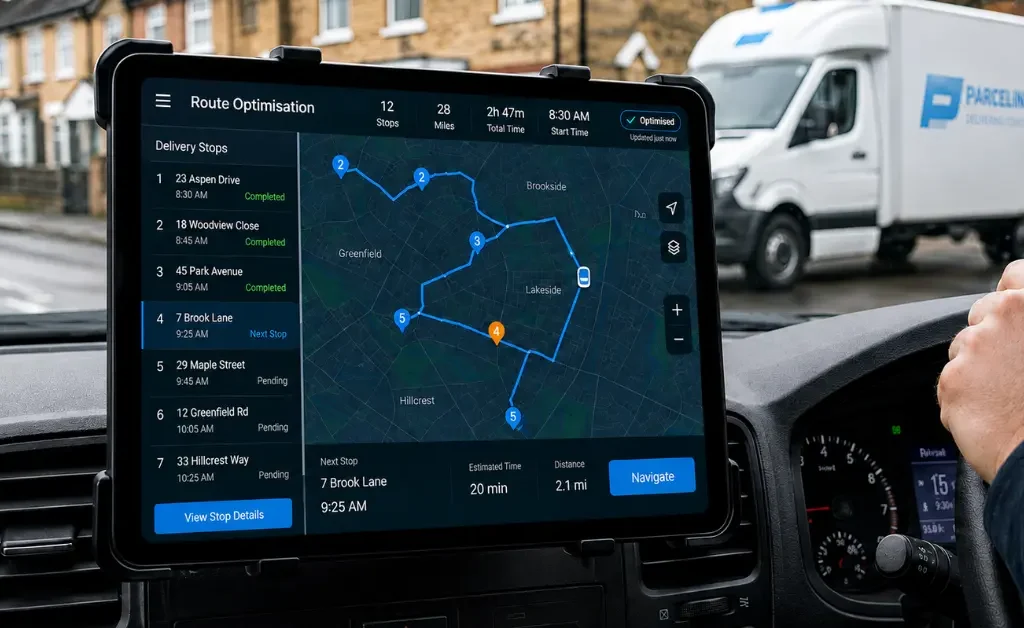
Route inefficiency is one of those last mile delivery challenges whose cost is distributed across hundreds of individual deliveries rather than appearing as a single visible line item. That makes it easy to overlook, but the accumulation is substantial across any meaningful delivery volume.
The Real Impact of Inefficient Routes
Unoptimised routing increases fuel consumption, extends driver hours, and reduces the number of deliveries a driver can complete per day. In dense urban markets, a poorly sequenced route can result in a driver crossing back and forth across a city when a logical sequence would have completed the same stops in significantly less time.
The cumulative effect on capacity, cost per delivery, and on-time performance is considerable, particularly during high-volume periods when operational slack is already limited.
How Route Optimisation Changes the Picture
Modern route optimisation technology accounts for real-time traffic, delivery time windows, vehicle capacity, and address sequencing to build the most efficient route possible before a driver leaves the depot.
The operational impact is significant. “AI-driven route optimisation has helped us reduce delivery costs by up to 20%, while also improving fuel efficiency and on-time performance,” says Yash Chojar, Director – Last Mile Delivery at Ecom Logistics. “It also allows us to offer highly competitive same-day delivery pricing, with some GTA deliveries starting at around $5 per package.”
For ecommerce brands, the practical benefit is faster, more consistent deliveries at a lower cost per order, without compromising visibility or customer experience.
Challenge 4: Rising Customer Expectations
Customer expectations represent one of the most continuously evolving last mile delivery challenges because the standard does not plateau. It keeps shifting, driven by technology, competition, and the experiences customers have with the best operators in their market.
Speed, Visibility, and Flexibility as Baseline Expectations
Same-day and next-day delivery are no longer premium options in major Canadian cities. 66% of consumers now expect same-day delivery as a standard option for online purchases.
Real-time tracking, proactive delay notifications, and flexible delivery windows sit alongside speed as baseline expectations. Customers want control over when and how their orders arrive, and they expect to be informed throughout the process without needing to ask. The delivery experience has become as significant a factor in purchase decisions as product quality or price.
How Brands Meet Expectations Without Unsustainable Costs
The most durable approach is building delivery operations around reliability and communication rather than promising speed that cannot be consistently delivered. A customer who selects a two-day delivery window and receives their package within it is more satisfied than one who was promised next-day and missed it.
Consistent, accurate delivery is a more sustainable competitive position than speed at any cost. This is precisely where a logistics partner with the infrastructure, owned fleet, and tracking technology to execute reliably makes a material difference to brand outcomes.
Challenge 5: Sustainability Pressures in Logistics
Sustainability is moving from a brand aspiration to an operational requirement. Consumer expectations, corporate commitments, and regulatory direction are all creating pressure on last mile operations, and the final mile is a significant focus of that pressure given its carbon intensity.
The Environmental Cost of Last Mile Delivery
The final mile is the most carbon-intensive segment of the delivery chain, driven by individual vehicle trips, urban stop-start driving, and the difficulty of efficiently consolidating residential deliveries.
Sustainability is increasingly influencing where consumers choose to shop. A growing share of shoppers say they would switch retailers over the absence of green delivery options, and many are willing to pay more for them. For Canadian brands with sustainability commitments, the delivery operation needs to reflect those values rather than contradict them.
Practical Steps Toward Sustainable Last Mile Operations
Electric vehicles eliminate tailpipe emissions on individual routes and reduce fuel costs over time. For brands that cannot invest directly in EV infrastructure, partnering with a logistics provider that already operates an EV fleet allows them to offer sustainable delivery options without building that capability in-house.
Route consolidation, reduced packaging, and out-of-home delivery options such as parcel lockers also contribute to a lower environmental footprint per order.
How the Right Logistics Partner Changes the Equation
Many of the last mile delivery challenges outlined in this blog are not solvable through incremental process improvements alone. They require infrastructure, technology, and operational expertise that takes years and significant capital to build. For scaling ecommerce brands, partnering with a logistics provider that has already made those investments is the most practical path forward.
What to Look for in a Last Mile Delivery Partner in Canada
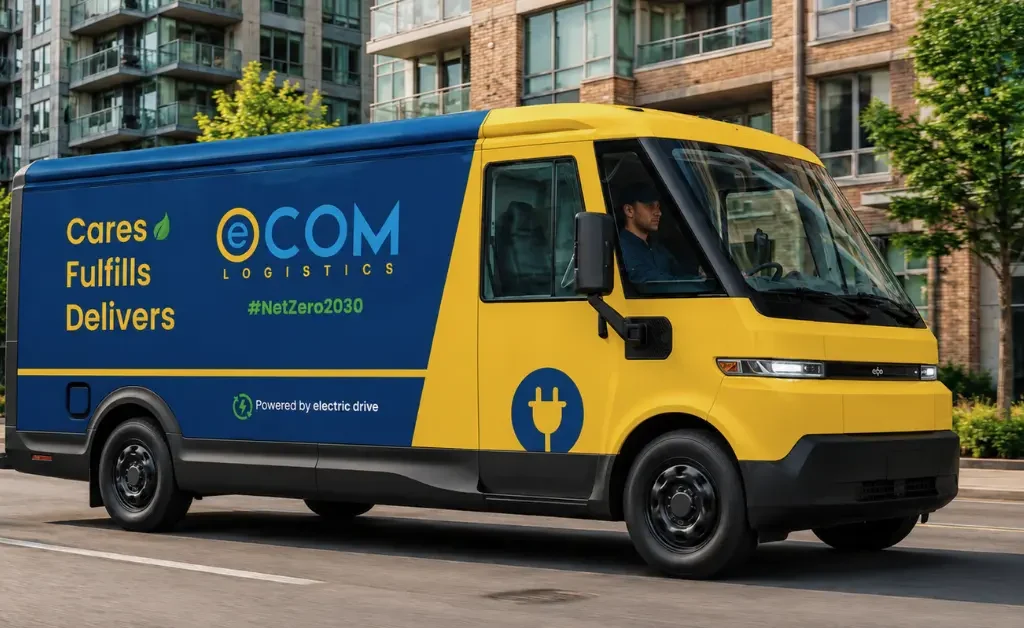
The right partner brings owned fleet capacity across key Canadian markets, real-time tracking technology, proven urban delivery protocols, EV capabilities for sustainable options, and the geographic coverage to serve both urban and regional customers consistently.
Ecom Logistics operates across major Canadian cities with a 500-plus vehicle fleet that includes electric vehicles, offering same-day and next-day last-mile delivery across Canada with full tracking visibility. If the last mile delivery challenges your brand is facing are affecting customer satisfaction or eroding margins, get in touch with our team to discuss how we can help.
Frequently Asked Questions
The five most significant challenges are high delivery costs, failed deliveries, route inefficiency, rising customer expectations, and sustainability pressures. Each affects operational performance and customer experience, and they are often interconnected.
Last mile delivery accounts for 53% of total shipping costs because it involves delivering individual packages to dispersed addresses rather than consolidated freight to central facilities. Labour, fuel, vehicle maintenance, and carrier surcharges all contribute to the total.
Pre-delivery notifications with specific time windows, real-time driver tracking, and easy rescheduling options are the most effective tools. Working with carriers trained in urban building access protocols also reduces failure rates meaningfully in multi-unit residential areas.
Canada’s combination of dense urban centres, remote rural areas, extreme seasonal weather, and vast geographic distances requires genuine local expertise. A single carrier network rarely serves all Canadian markets with equal reliability, which makes the choice of logistics partner especially consequential.
Route optimisation software uses real-time traffic data, delivery time windows, and address sequencing to build the most efficient driver routes possible. This reduces fuel costs, increases deliveries per driver per day, and improves on-time performance across all delivery zones.
The most impactful step is fleet electrification, either directly or through a logistics partner with an existing EV fleet. Route consolidation, reduced packaging, and parcel locker networks also contribute to a lower carbon footprint per delivery.
Higher expectations for speed, visibility, and flexibility require investment in tracking technology, proactive communication, and delivery infrastructure capable of fulfilling same-day and next-day orders reliably. Brands that cannot consistently meet these expectations see the impact directly in repeat purchase rates and customer retention.
The clearest signals are when delivery performance is affecting customer satisfaction and the cost and complexity of managing last mile operations in-house exceeds what a specialist logistics partner would charge. For most scaling brands, outsourcing to a 3PL with owned fleet capacity and established Canadian coverage is the most cost-effective path to consistent last mile performance.
- About the Author
- Latest Posts